Specialty Leather Materials and Jacket Design Projects
Explore material-led and distinctive jacket projects, including sheepskin, tea-core horsehide, oiled cowhide, western fringe, embossing, studs and long belted PU coats. These guides explain the particular surface, construction and sample decisions behind each direction.
The basic materials guide compares material families; this directory takes you into the garment designs where the selected surface or detail becomes the main feature.
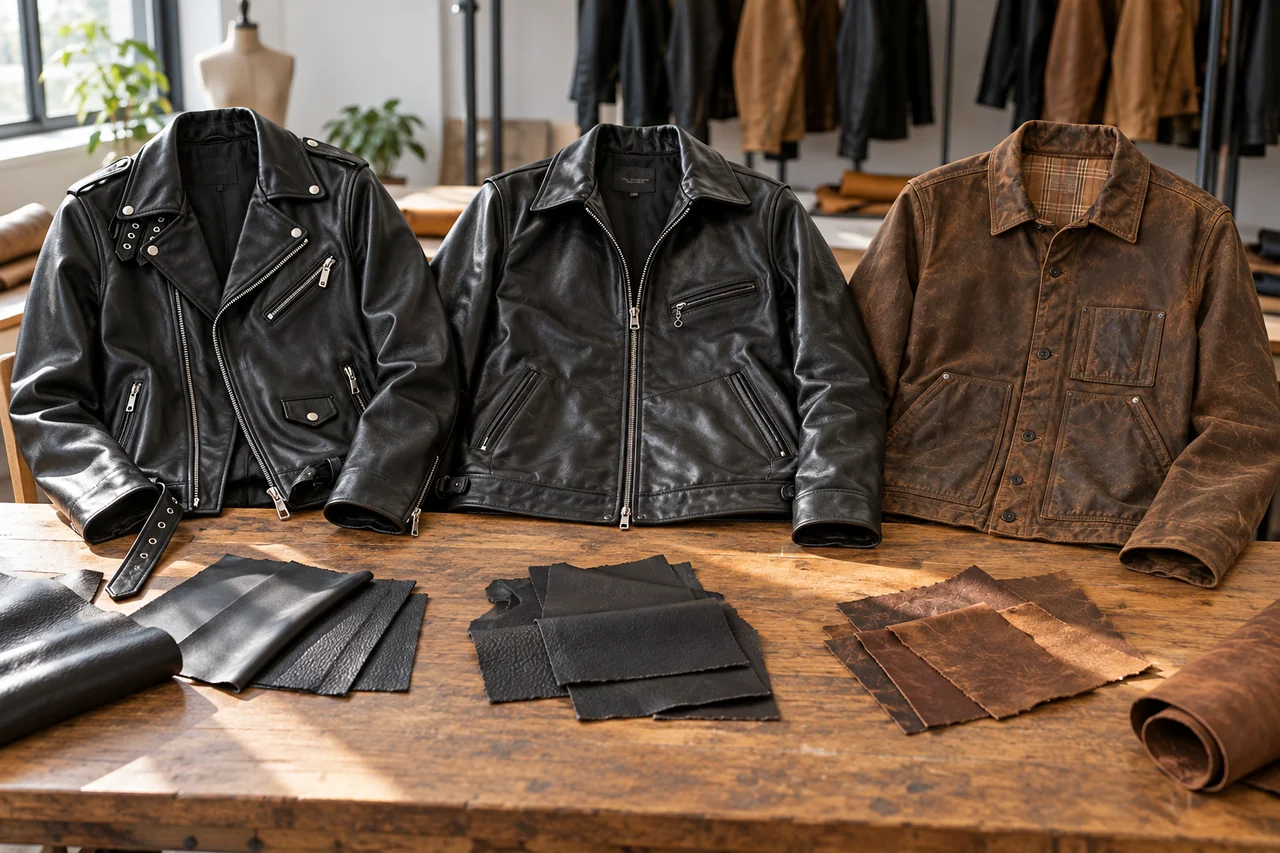
Choose the Material or Design Direction
Start with the feature that makes your project distinctive. The guides below separate material-led decisions from construction, surface decoration and long-coat proportions.
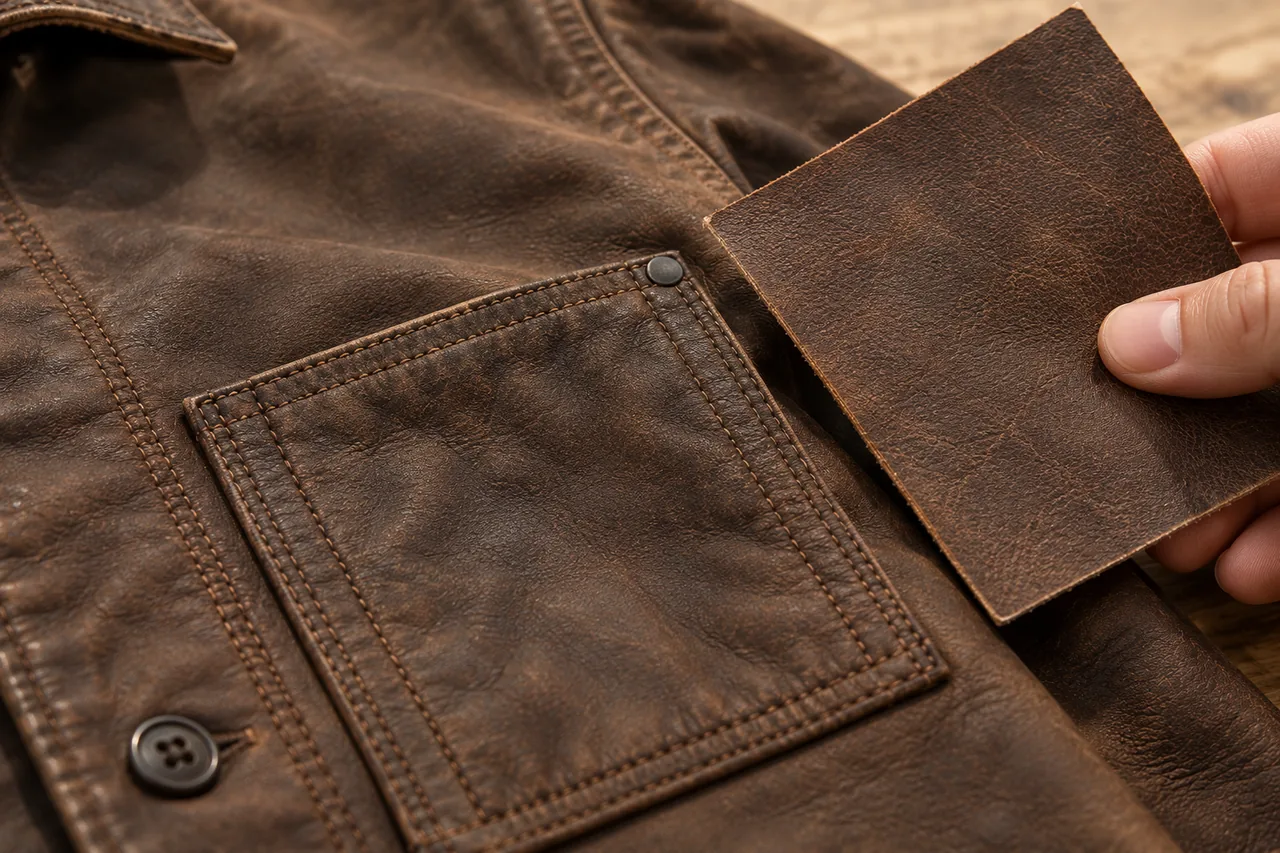
Describe Grain and Finish with a Physical Reference
For an oiled cowhide trucker, the surface character belongs alongside the button front, collar and pocket construction. Share the handfeel and appearance you want, with a swatch where possible.
Keep the exact material reference with the sample rather than expecting every leather with the same general name to match.
Separate Leather Identity from Appearance
A smooth or distressed surface does not identify the leather on its own. State the requested material, thickness, finish and colour reference in the component list.
For sheepskin or tea-core horsehide projects, connect those details to the design and review the selected material in the sample.
The requested leather and supplier or item reference.
The specified thickness and acceptable range.
Surface treatment, colour and reference swatch.
The shape and construction using that material.
Map Statement Details before Sampling
Fringe, studs and quilted panels change the way a jacket is laid out and assembled. Show each feature in a placement drawing with its dimensions and attachment detail.
Keep the visual direction clear while identifying the parts that need a physical sample review.
Mark the exact panel and distance from seams.
Give length, width and spacing.
Describe how the detail joins the garment.
Identify the sample views needed for approval.
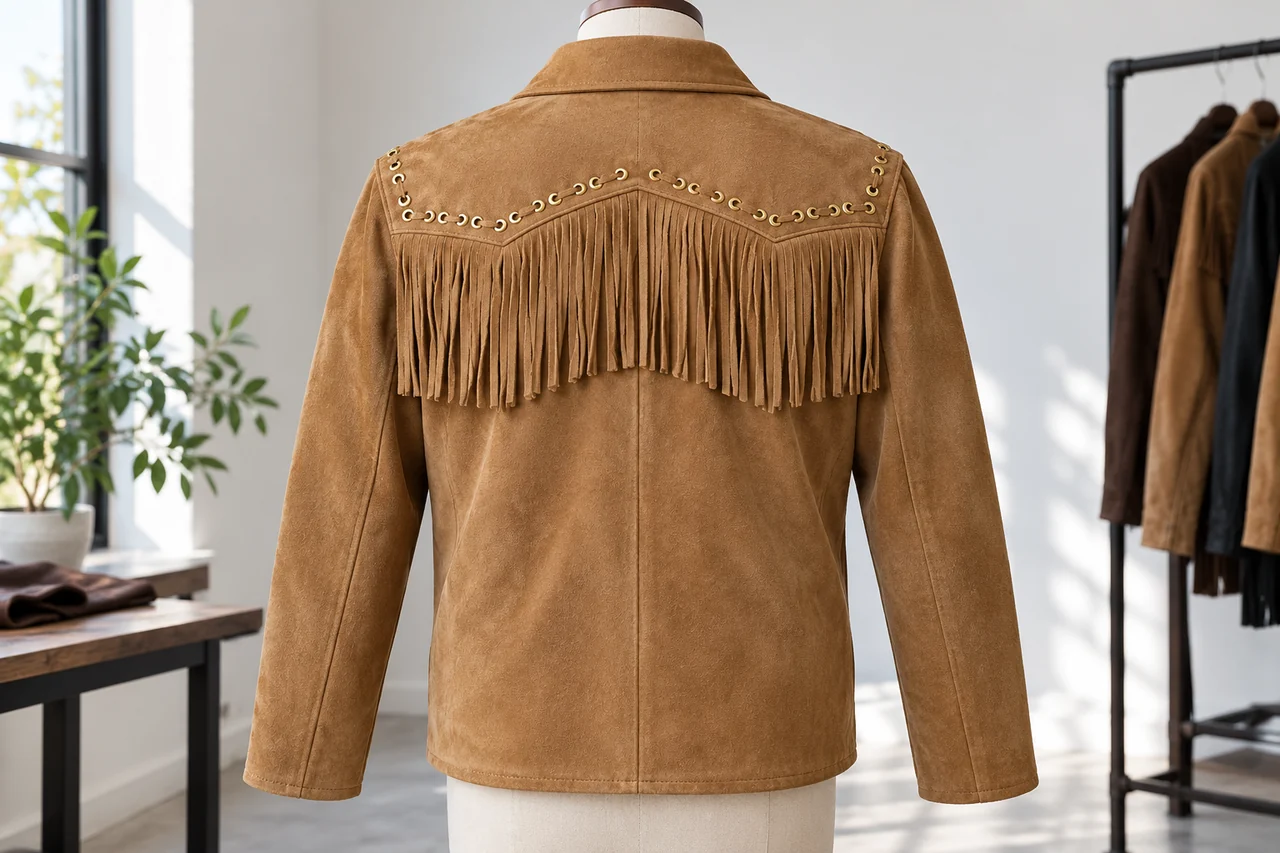
Give Fringe Its Own Construction Brief
Show where the fringe begins, how it follows the yoke and the finished length you want. Front and back views help explain the movement and density of the design.
Review the fringe with the jacket’s shoulder, sleeve and body proportions so the decoration feels part of the garment.
Keep Long-Coat Proportions Connected
A long belted PU coat needs more than a longer jacket body. Explain the belt position, pocket access, sleeve proportion and the opening you want below the waist.
The material surface and lining should support that complete shape in the sample brief.
Collar, lapel and shoulder position.
Belt placement and fastening.
Length, opening and pocket access.
Lining coverage and finishing.
Specify an Embossed Surface by Component
An embossed appearance can be part of different material constructions. Name the actual material as well as the texture, then show how the pattern should sit across lapels, pockets and belts.
Review the surface direction and colour with the garment sample.
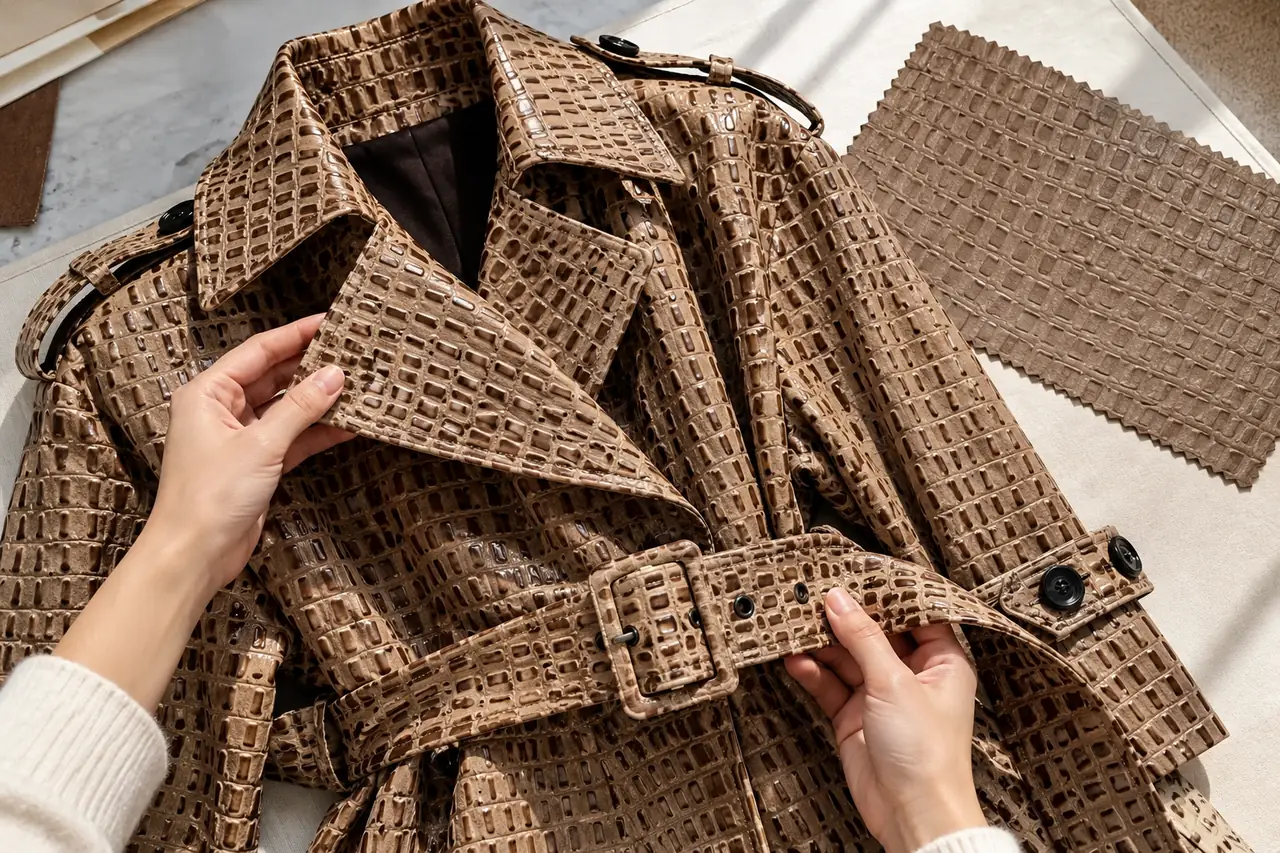
Bring the Special Feature into the Approval Record
A distinctive surface or decoration should appear in the agreed reference, not remain an informal note. Keep close-up photos and the accepted specification with the final sample version.
Discuss any proposed change to the special material or trim before it becomes part of the order.
Swatch, drawing or original artwork.
The feature shown on the garment.
Specific changes with dimensions or images.
One identified material and design record.
Share What Makes Your Design Different
Send the design, material references and close-ups of the details you want to create. Add the size mix, quantity plan and intended dates.
We can discuss how the material and construction fit together in your custom jacket project.
Qingdao Relia Jacket Co., Ltd.
Shuyuan Road, Qingdao, Shandong, China
+86 18561762631 · WhatsApp
Front, back and detailed placement views.
Identity, surface, thickness and supply route.
Quantities, size range and delivery needs.