Plan Patchwork Jacket Production from Available Leather Pieces
Available leather pieces can become an intentional patchwork jacket design when the panel layout is planned around the real assortment. We can discuss your pieces, colour direction and silhouette together, then use a sample to define the level of variation you want. This page explains usable panel sizes, seam layout and material allocation for a patchwork order.
- Starting point
- The real leather-piece assortment
- Design focus
- Planned variation and seam layout
- Key outcome
- An accepted patchwork panel map
A Garment Plan for Your Leather Assortment
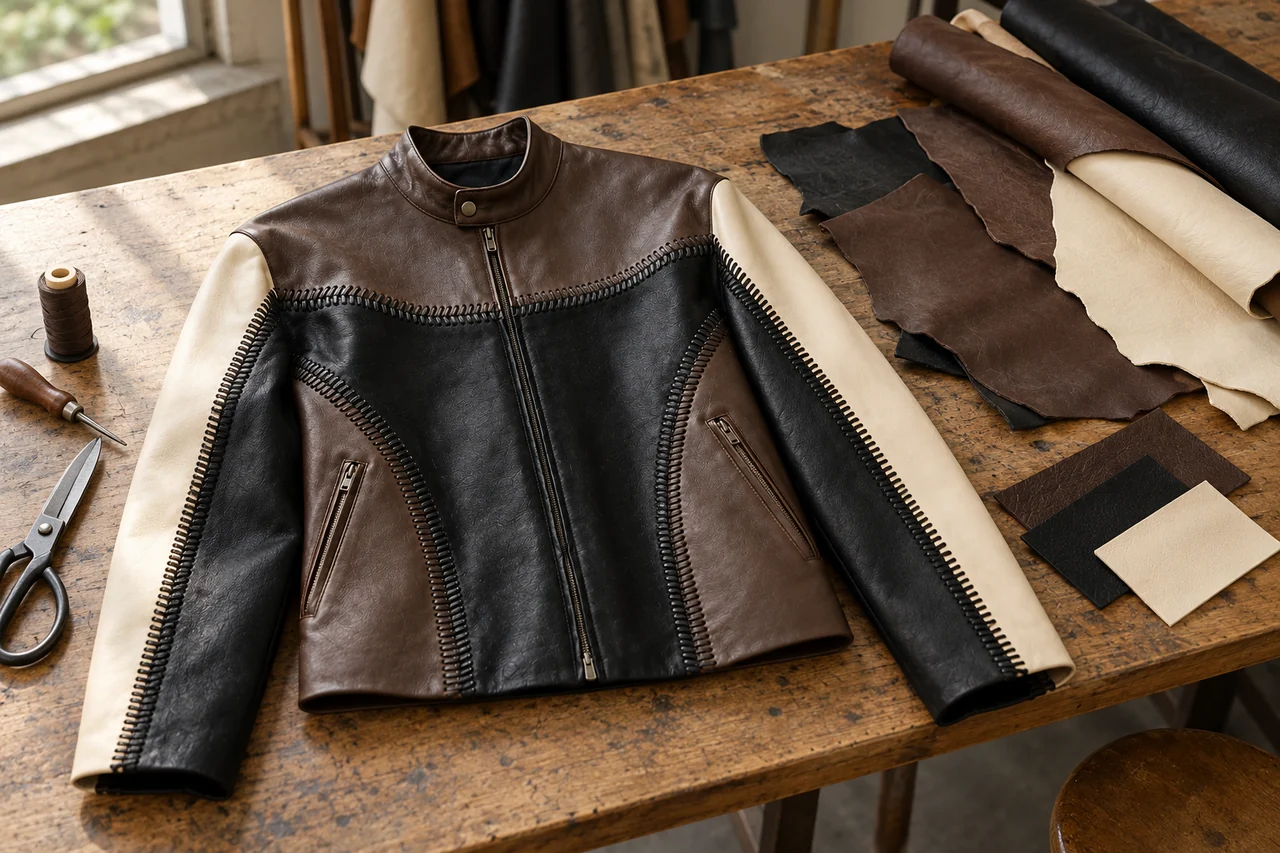
Relia develops customer-material jacket projects around the garment you want to make. For patchwork, Relia connects the available leather assortment with a repeatable panel concept, helping you distinguish deliberate variation from an uncontrolled mix of unrelated pieces.
Sort Materials Around the Design
Small leather pieces can support a deliberate patchwork layout when their usable dimensions suit the design. Thickness, softness and shade should work together at each seam. A layout that only follows available scraps can become visually uneven or excessively bulky, so the panel map needs to serve the finished jacket as well as material use.
Build the Panel Map Around Usable Leather Areas
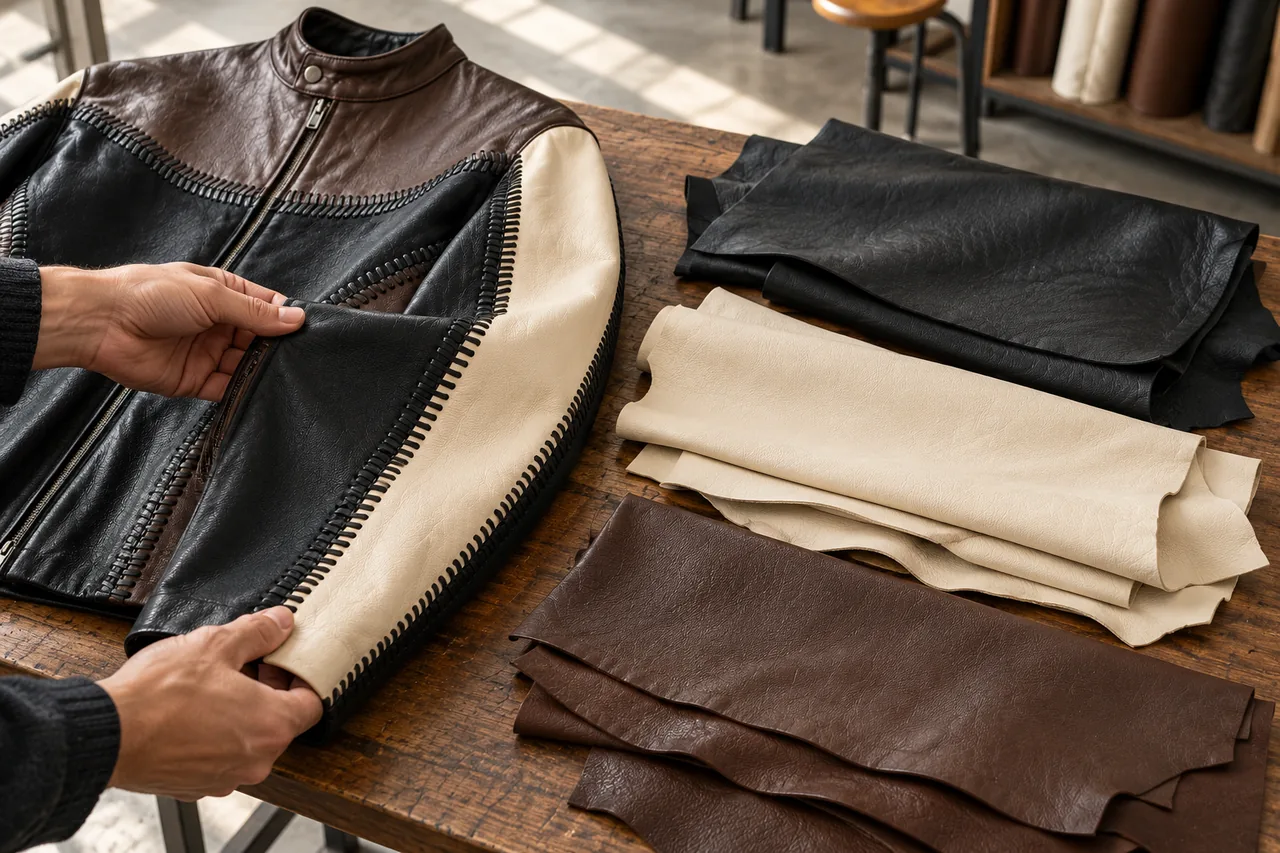
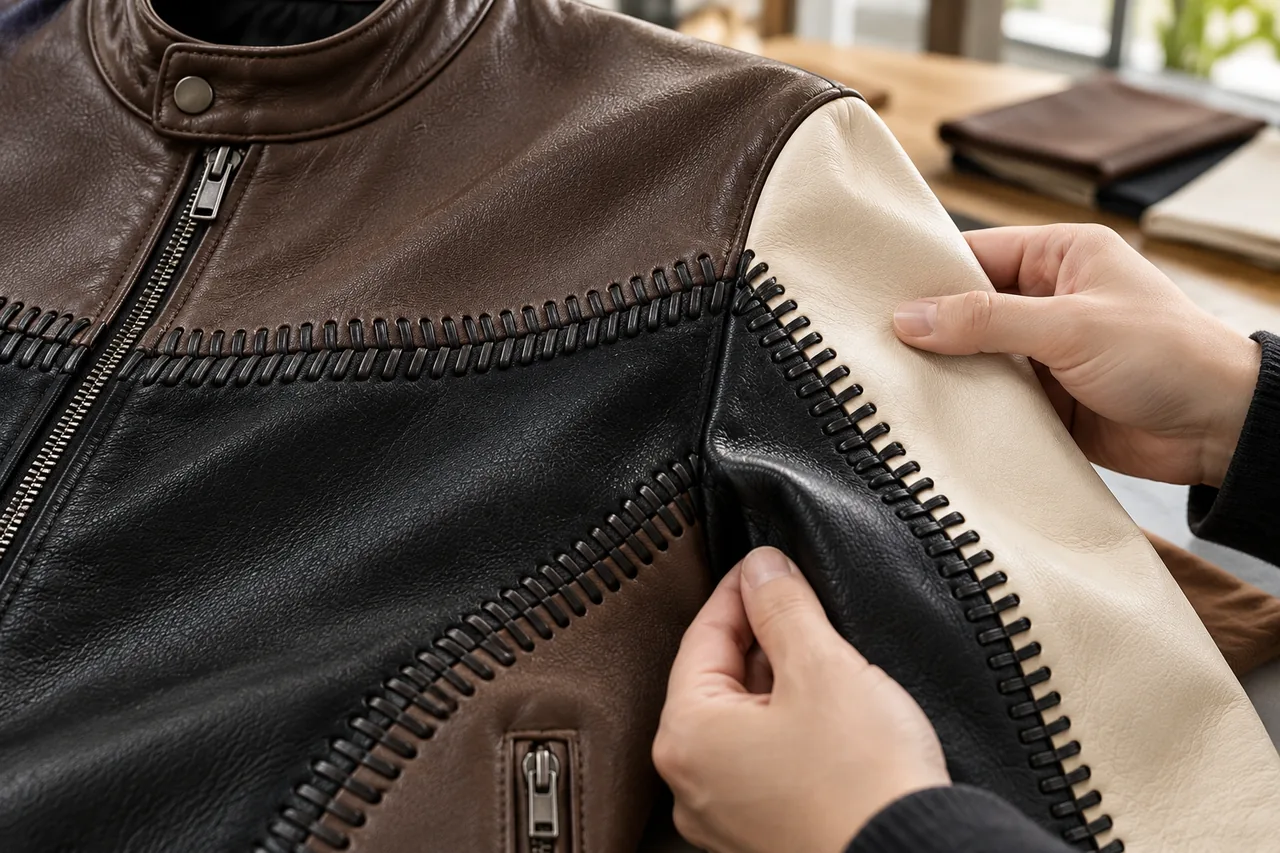
Relia starts the patchwork discussion with the largest required panels and the usable dimensions of the pieces. Smaller areas can serve planned inserts rather than forcing extra seams into important fit points. Joining pieces adds seam allowances and thickness, so the layout must consider how junctions meet at pockets, armholes and front edges. The assembled sample shows whether the visual rhythm and garment handling work together.
Group pieces by usable dimensions, thickness, finish and the intended colour relationships.
Position planned panel joins around the silhouette, pockets and movement areas.
Review seam allowances and overlapping layers where several panels meet.
Use the sample and panel map to describe which differences belong in the design.
Choose the Degree of Variation
Decide whether each jacket should follow one repeated layout or an agreed variation concept. Identify fixed colour positions and flexible areas. That decision affects how the assortment can be discussed for a multi-garment order.
Parts that follow the same colour map.
Areas where approved variation is intended.
The sample or layout used for comparison.
A Layout Sample Makes the Contrast Tangible
Review the assembled colours and seam relationships in a complete garment. A pleasing swatch group may read differently across the body and sleeves. Use the sample to settle the placement that matters most.
A Panel Map Makes Variation Intentional
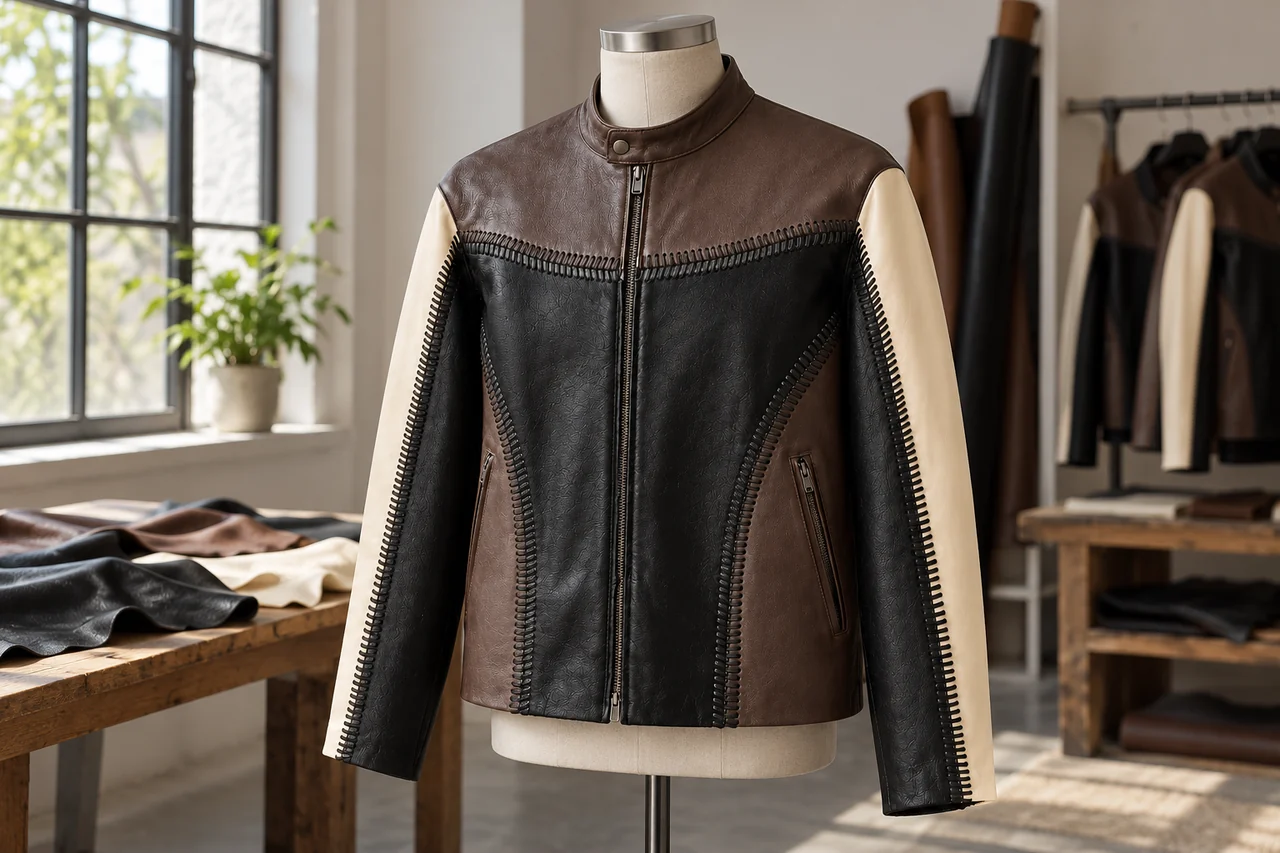
For an illustrative two-tone jacket, allocate one colour to the upper front and sleeve accents and another to the lower body. The accepted map can permit a defined amount of natural variation while keeping the outline consistent. More joins also mean more construction work, which belongs in the sample and quotation discussion.
The groups joined together.
Seam and edge treatment.
The intended visible result.
Review the Panel Junctions Closely
- Relia reviews adjacent panel appearance, seam continuity and the handling of multi-panel junctions in the sample.
- Check the inside at crowded joins as well as the outside colour balance.
- Review the usable-piece allocation against the intended jacket quantities.
- A patchwork approval is clearer when it defines the allowed pattern of variation rather than asking every naturally different piece to look identical.
Order Planning Follows the Assortment
Provide the proposed size mix alongside the material record. Discuss the available supply, layout requirements and any agreed alternatives together. Quantities, material handling, sample costs and timing are confirmed for the project by email.
The available assortment.
Fixed and variable panel positions.
The requested garment allocation.
The project-specific commercial agreement.
Start with Photos of the Real Pieces
Send your assortment and jacket idea to Qingdao Relia Jacket Co., Ltd. Include piece dimensions and the intended colour map so we can discuss a practical material-led project.
Photos, sizes and quantities.
Panel drawing and appearance direction.
Size range and proposed quantities.
Start Your Custom Jacket Project
Send assortment photos, piece sizes, approximate quantities, the silhouette and your variation preference. Relia will discuss the sample, construction and order scope with you. You can email drawings and material references as attachments or share a file link.
Prepare your enquiry in four parts
- Design: Attach your drawing, tech pack or the catalogue reference and mark the changes.
- Materials: State the shell, lining and trims, and whether we source them or you supply them.
- Quantities: Break the planned order down by style, colour and size.
- Destination and timing: Share the delivery destination and intended schedule for discussion.
Phone
+86 18561762631China Factory
Qingdao Relia Jacket Co., Ltd.Shuyuan Road, Qingdao, Shandong, China
Order quantities, sampling arrangements, pricing and delivery are discussed for your project and confirmed through our correspondence.