Cut-and-Sew Jacket Orders with Customer-Supplied Materials
Tell us whether you are supplying material rolls, leather pieces or already cut jacket components, and we can discuss the making work needed to complete your order. Cut-and-sew scope depends on the condition of those inputs as well as the design. This page helps you define the component kit, sewing instructions, missing trims and sample checks before requesting a manufacturing quotation.
- Input condition
- Uncut materials or pre-cut pieces
- Manufacturing focus
- A complete, identified component kit
- Key outcome
- A clear making-work scope
A Defined Cut-and-Sew Scope
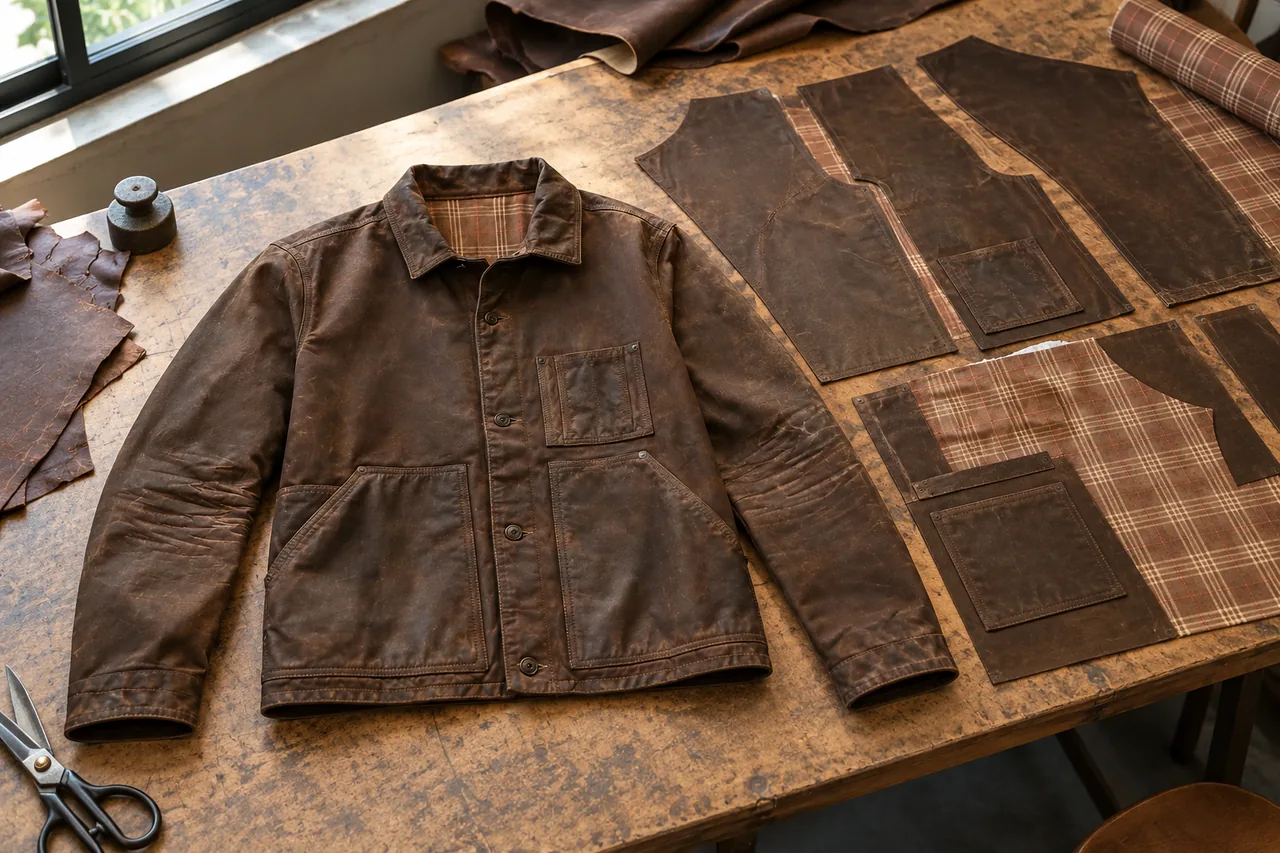
Relia accepts agreed customer-material projects for custom jackets. Relia distinguishes a material-supply job from a pre-cut-component job, because pattern responsibility, cutting work, component quantities and the sewing route differ between the two.
The Pattern and Material Need to Agree
A complete material kit includes more than outer leather: lining, pocketing, reinforcement, thread direction, fasteners, labels and packing can all belong to the garment. Some parts may be supplied by you and others sourced to your specification. An explicit component schedule makes this split visible before work is organized around the accepted design.
Prepare a Complete Component Kit for Sewing
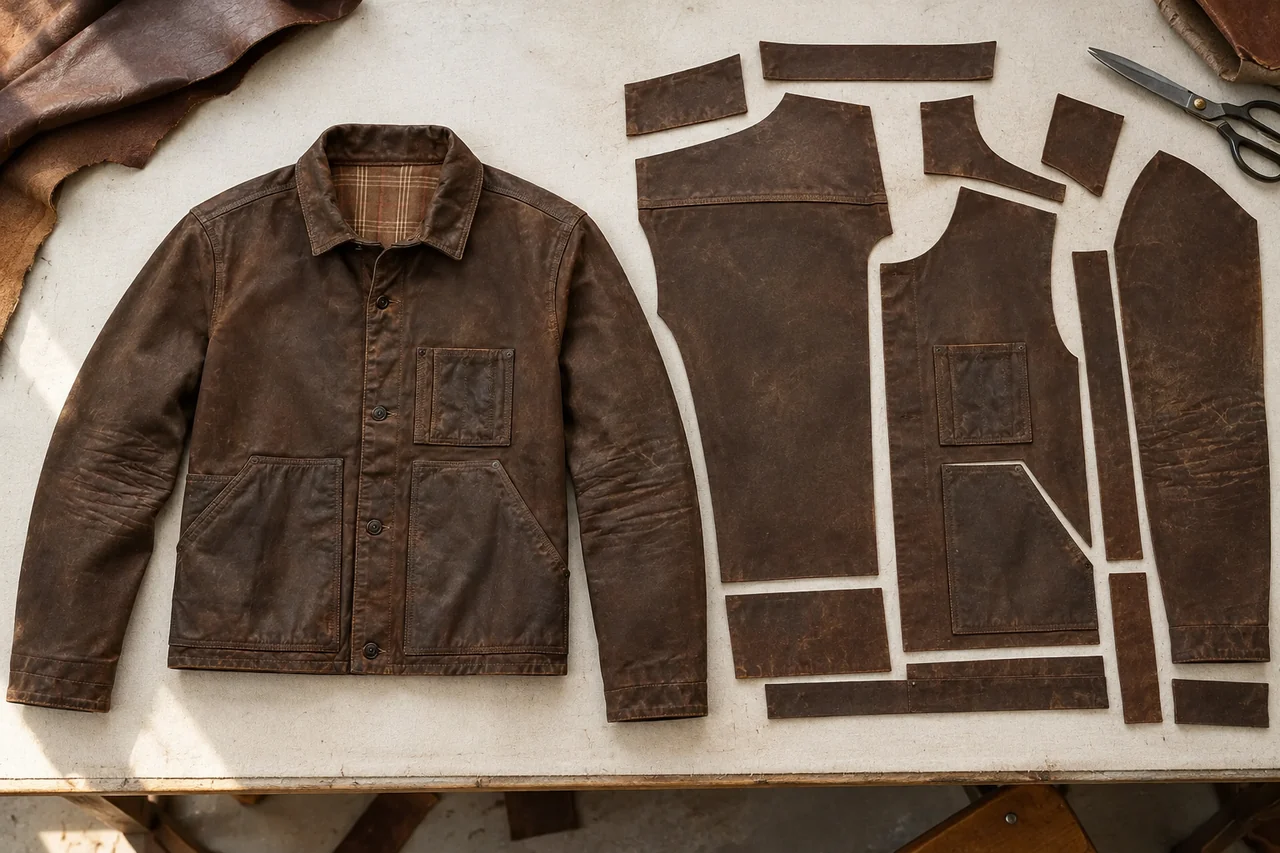
For pre-cut pieces, Relia reviews the piece list, paired parts, notches and seam allowances against the intended assembly. Missing or mismatched components can stop a garment even when the shell panels are present. Pocket bags, facings, lining and fastening parts need their own allocation. For uncut materials, the pattern and cutting layout remain part of the manufacturing scope before sewing begins.
State exactly which materials and cut pieces you will supply and their condition.
Connect each piece with the jacket component list, size and left or right side.
Join shell, pockets, fastening and lining using the agreed sewing details.
Check the finished sample and identify the making and supplied-material responsibilities.
Construction Instructions Stay with the Design
Show seam lines, pocket construction and lining attachment in your drawings. Identify any prepared part that constrains assembly. The manufacturing discussion should use the actual starting material and intended finished garment together.
Front, back and relevant internal details.
The form in which each part arrives.
The intended junctions and finishes.
A Sample Tests the Supplied Components Together
Use the sample to review the combination of your material and the chosen construction. Check the surface, edges and component alignment. Describe changes by garment part so feedback can be carried into a clear revision.
Build the Kit Around One Jacket Unit
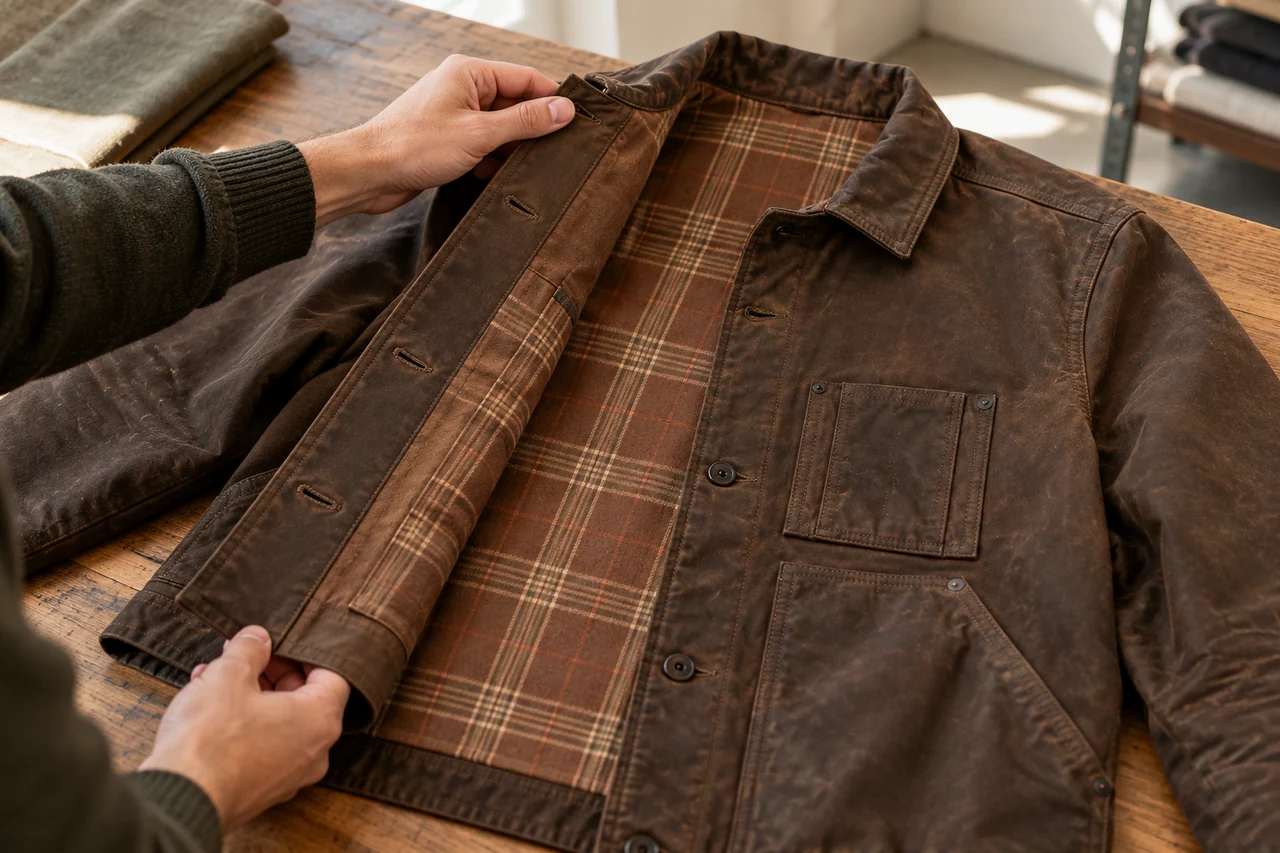
An illustrative kit record can show two fronts, a back, two sleeves, collar parts, lining pieces and the specified fasteners for one size. Multiplying an accepted unit kit by the colour-size allocation is clearer than sending unrelated bulk totals without their garment relationship.
Delivery identification and receipt arrangements.
The route for discussing insufficient material.
Treatment of unused material after the project.
Checks Follow the Finished Specification
- Relia reviews whether the supplied pieces join to the intended garment before treating the kit as ready for a run.
- Compare seam lengths, notch positions and the resulting finished measurements.
- On the assembled sample, inspect shell-to-lining connections, fastening operation and the inside finish.
- Keep component quantity reconciliation separate from the review of garment quality; both matter to a cut-and-sew order.
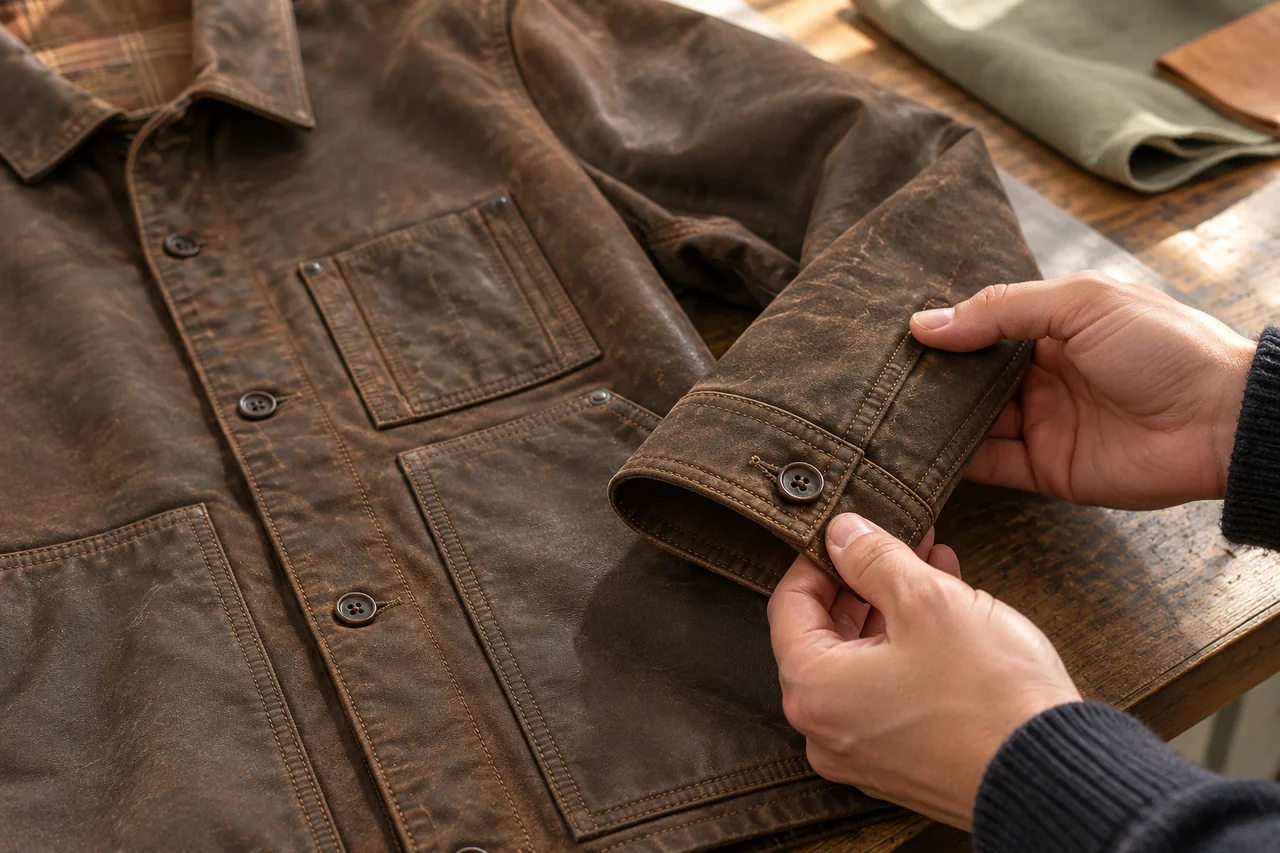
The Quote Makes the Responsibility Split Visible
Provide the material supply list and proposed garment quantities together. Ask about project-specific processing charges, sample costs, quantities and timing. Delivery, duties and inspection arrangements are confirmed through the order discussion.
Materials and components you provide.
The defined garment construction.
Styles, colours and size quantities.
Destination and intended timing.
Send the Actual Starting Point
Email Qingdao Relia Jacket Co., Ltd. with the design, material photos and component supply list. We can discuss the next step for manufacturing jackets with your materials.
Design and material format.
Supplied and sourced components.
Quantities and schedule.
Start Your Custom Jacket Project
Send the component list, pattern or sewing instructions, material condition and proposed quantities. Relia will discuss the sample, construction and order scope with you. You can email drawings and material references as attachments or share a file link.
Prepare your enquiry in four parts
- Design: Attach your drawing, tech pack or the catalogue reference and mark the changes.
- Materials: State the shell, lining and trims, and whether we source them or you supply them.
- Quantities: Break the planned order down by style, colour and size.
- Destination and timing: Share the delivery destination and intended schedule for discussion.
Phone
+86 18561762631China Factory
Qingdao Relia Jacket Co., Ltd.Shuyuan Road, Qingdao, Shandong, China
Order quantities, sampling arrangements, pricing and delivery are discussed for your project and confirmed through our correspondence.