
Jacket Projects with Customer Materials and Nominated Suppliers
Choose how materials reach your custom jacket project: we can purchase to your specified material brief, or process agreed physical materials you supply. A nominated supplier, a complete component kit and a collection sharing one leather each need a different receiving and approval plan.
Use this directory to choose the sourcing arrangement. For differences between cowhide, sheepskin, suede, PU, lining and filling, use the material-selection guide.
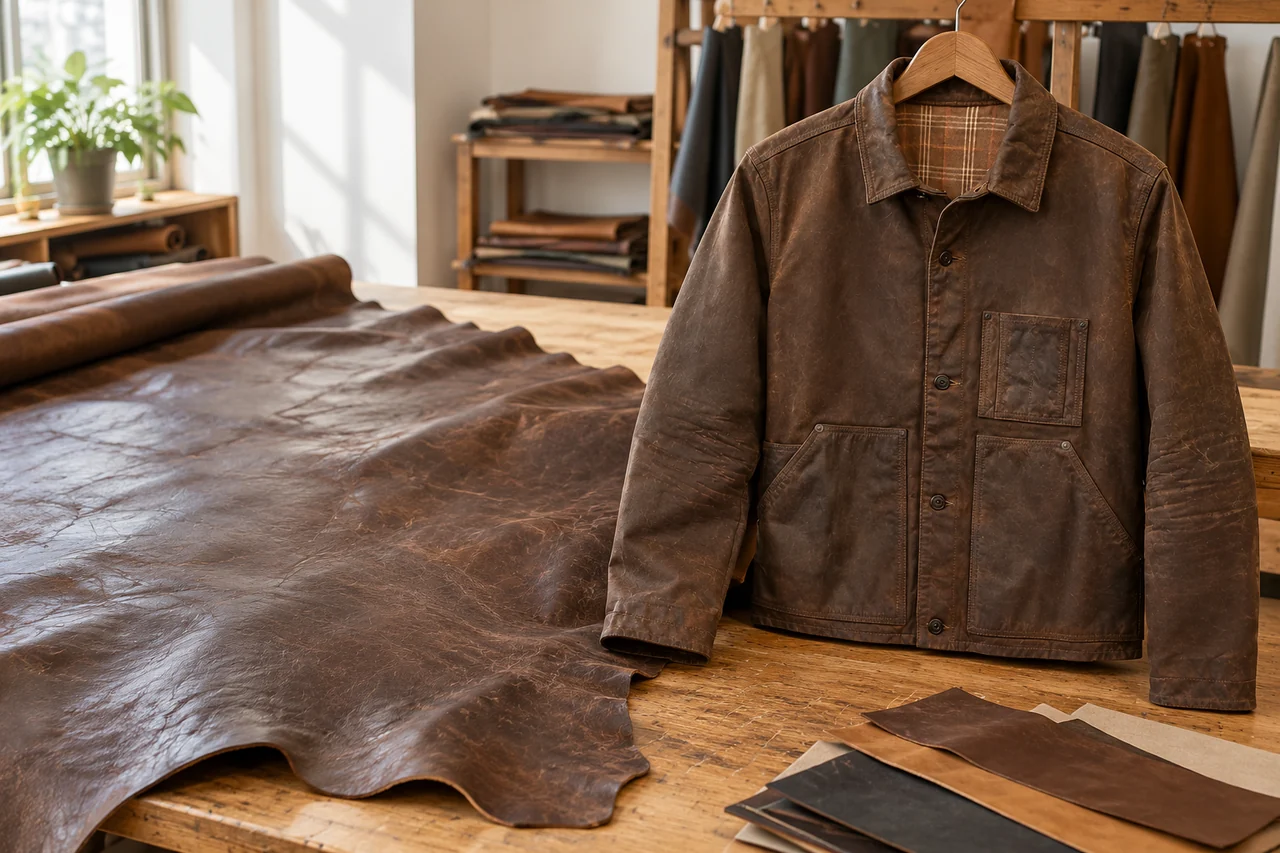
Choose Your Material Collaboration Route
Supplying the leather is different from supplying every component. These guides separate the sourcing responsibilities, material decisions and sample inputs for each type of project.
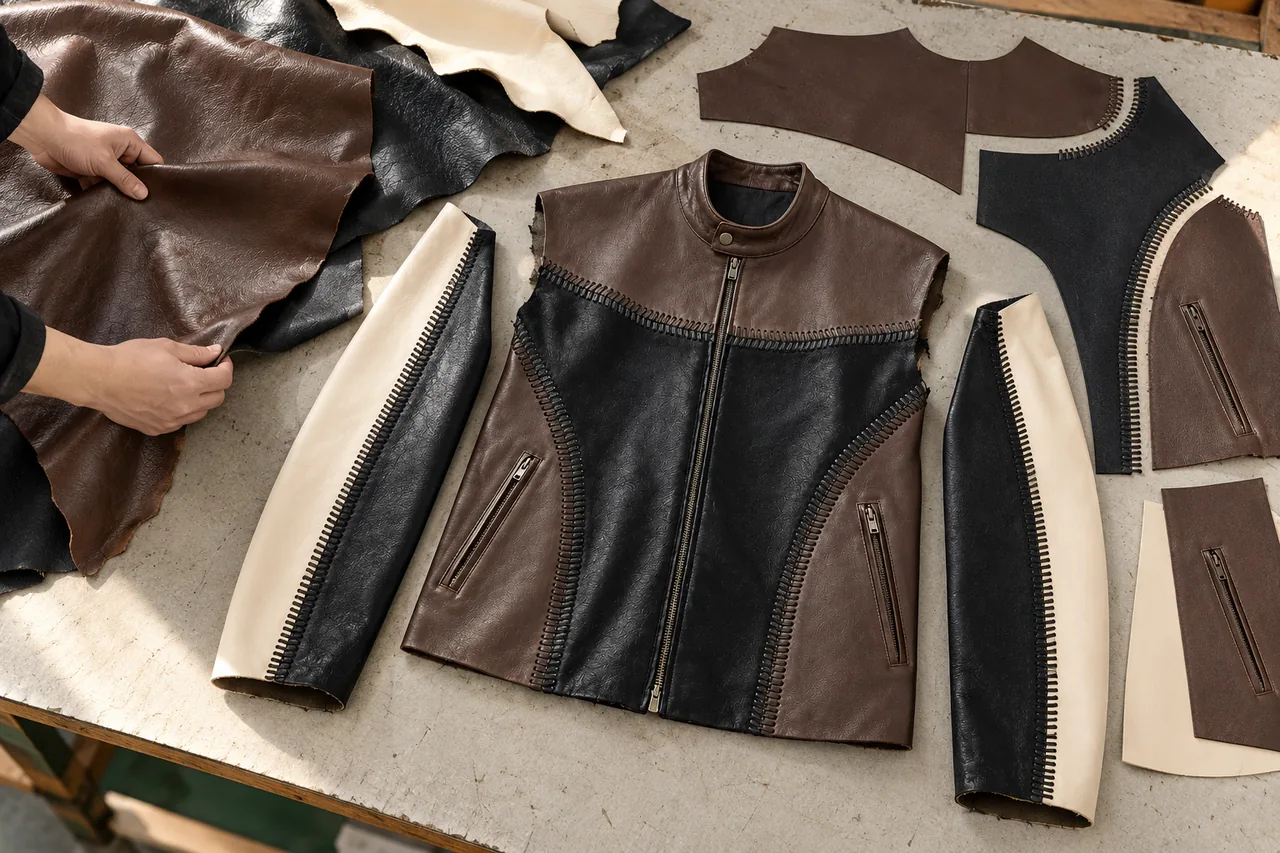
Make Available Leather Work with the Pattern
Share the size, thickness, surface and colour range of the leather you plan to use. A patchwork jacket needs an intentional panel map; a plain-front jacket needs a different cutting discussion.
The usable pieces and the garment design should be reviewed together before quantities are treated as a finished production plan.
Give Every Component an Owner
List who supplies the shell, lining, rib, thread, labels and fasteners. If your brief combines your leather with factory-coordinated trims, name the trims that still need a specification.
This keeps a supplied-material enquiry from leaving small but necessary parts undecided.
Material identity, finish, thickness and quantity.
Composition, colour, construction and required lengths.
Type, dimensions, finish and matching parts.
Artwork, wording, placement and supply responsibility.
Separate a Supplier Choice from a Material Approval
A nominated supplier tells us where you want a component to come from. The material specification explains which exact item and finish the garment requires.
Keep supplier references, swatch approval and any agreed alternative attached to the same component entry.
The contact and exact item you nominate.
The accepted swatch or agreed specification.
The sample showing how the component works.
Sample the Whole Material Combination
The shell, lining and rib all contribute to the finished shape. Use the sample to review the combination, particularly when changing from leather to PU or combining different fabrics.
Keep separate component specifications for each version so a shared design does not blur their material differences.
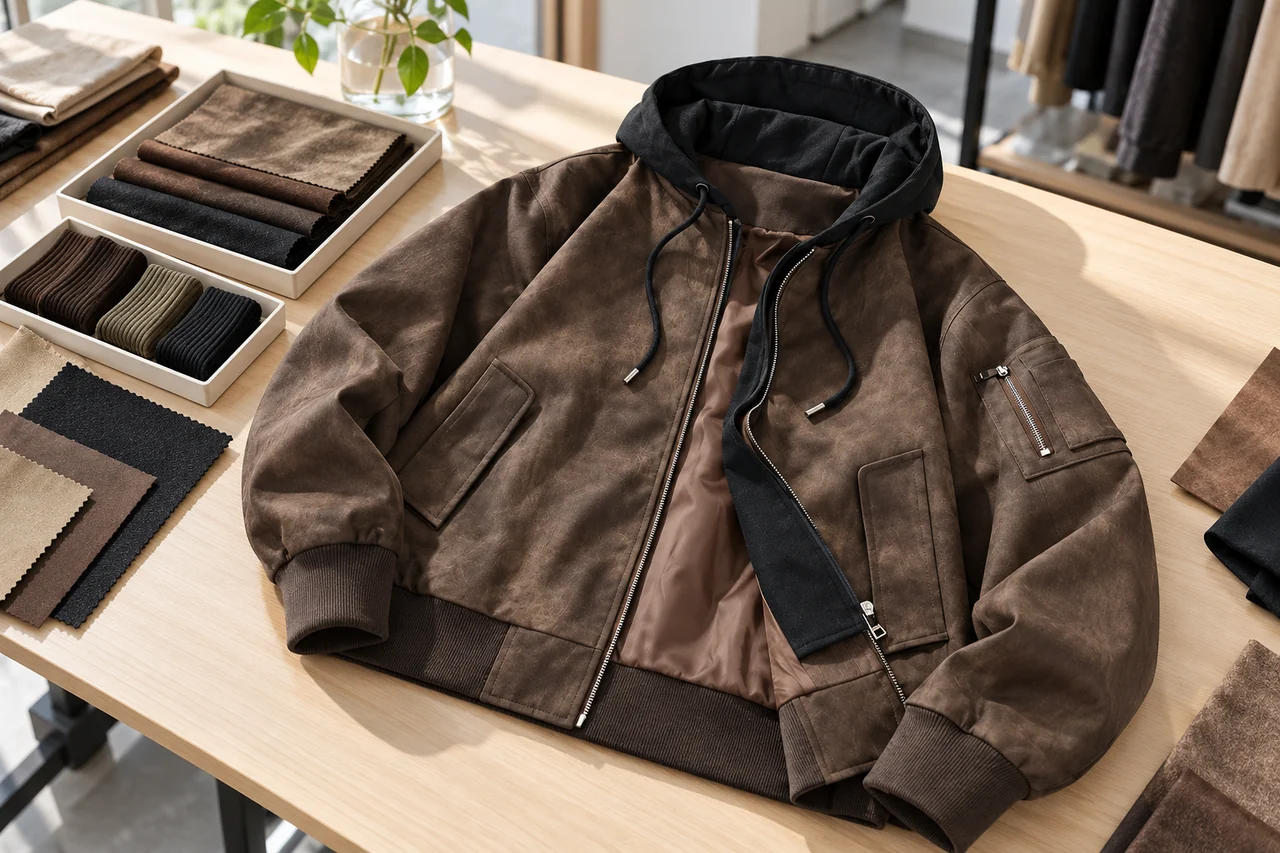
Record Material Quantities by Design
If one batch of leather will serve several styles, show the allocation by garment and colour. Keep the proposed quantities alongside the corresponding pattern version and size mix.
Discuss cutting allowances, usable material and the treatment of remaining pieces as part of the project arrangement.
Which designs use each material batch.
The quantity breakdown for every design.
Usable pieces and the proposed cutting approach.
How shortages and remaining material are handled.
Describe the Surface You Want to Keep
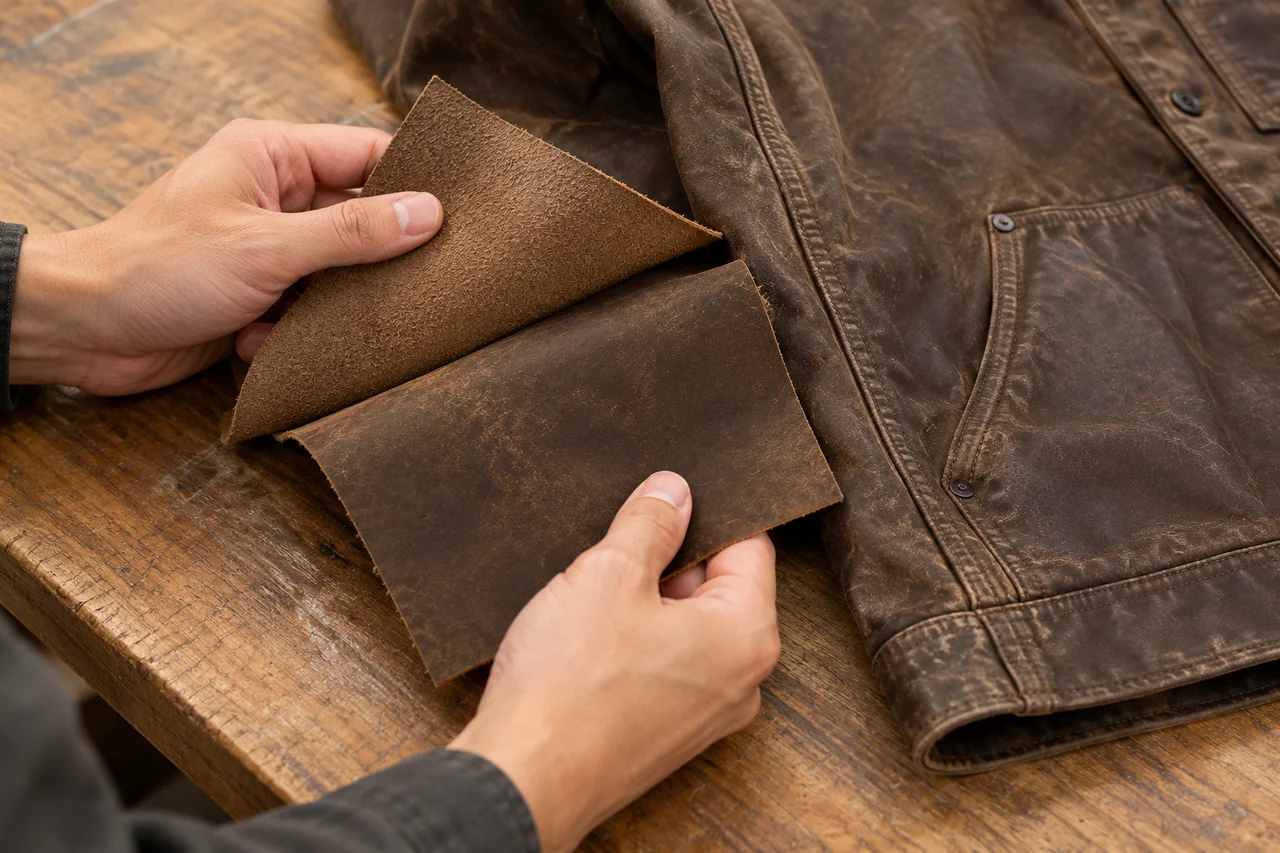
A colour name alone does not describe grain, reverse surface or handfeel. Send clear photos and a physical reference when those details matter to the design.
For a supplied material, identify any visible variation you want included or excluded from particular panels.
Agree the Receiving and Change Arrangements
Before materials move, discuss the receiving information, quantities, delivery timing and responsibility for any shortfall. Record material changes in writing rather than replacing one component informally.
The commercial arrangements for supplied materials are confirmed with your order.
Item, colour and batch references.
Units and the quantity supplied.
The planned arrival and sample sequence.
A named approval for a changed component.
Send Your Material and Design Brief Together
Tell us what you will provide, what you want sourced and which garment you want to make. Add photos, component references and the style-colour-size quantities.
We can then review the material route with your design rather than treating the leather as an isolated purchase.
Qingdao Relia Jacket Co., Ltd.
Shuyuan Road, Qingdao, Shandong, China
+86 18561762631 · WhatsApp
Drawings or an owned sample with key dimensions.
A component list with supply responsibilities.
Quantities, destination and intended dates.