Shell and panel allocation
Name the body, sleeves, collar and any contrasting panels. Where materials differ, describe the boundary between them so the intended combination is clear.
MATERIALS FOR CUSTOM JACKET PRODUCTION
Our China factory supports both purchasing to the customer's material specification and processing customer-supplied physical materials. Start with the jacket design and identify the shell, lining, filling, trim and hardware separately. A component sheet connects each material to the part where it will be used.
Name the object and unit for every weight figure. Material weight in g/m² describes mass per area; finished-jacket weight in g or kg concerns the complete garment. Record its size, components and measurement conditions when comparing garment weights.
Our catalogue includes genuine-leather specifications, PU and synthetic-leather designs and mixed-material references. Compare the specification of the version you want, alongside its colour, finish and measured fit.
| Factory-purchased materials | Customer-supplied materials |
|---|---|
| Provide the required composition, colour, finish and reference for each component so the factory can purchase to your specification. | Identify the physical materials you will supply, their quantities and the jacket parts they belong to. |
| Connect the agreed material reference with the design and sample version used for the order. | Keep the supplied material identity and delivery details with the same design and sample reference. |
| Agree which shell, lining, trims and hardware the purchasing scope includes. | Agree which components arrive with your materials and which remaining items need factory purchasing. |
For either route, review the actual material combination with the pattern, seams, fastening and artwork. Record any accepted change in the component sheet before it becomes part of the production reference.
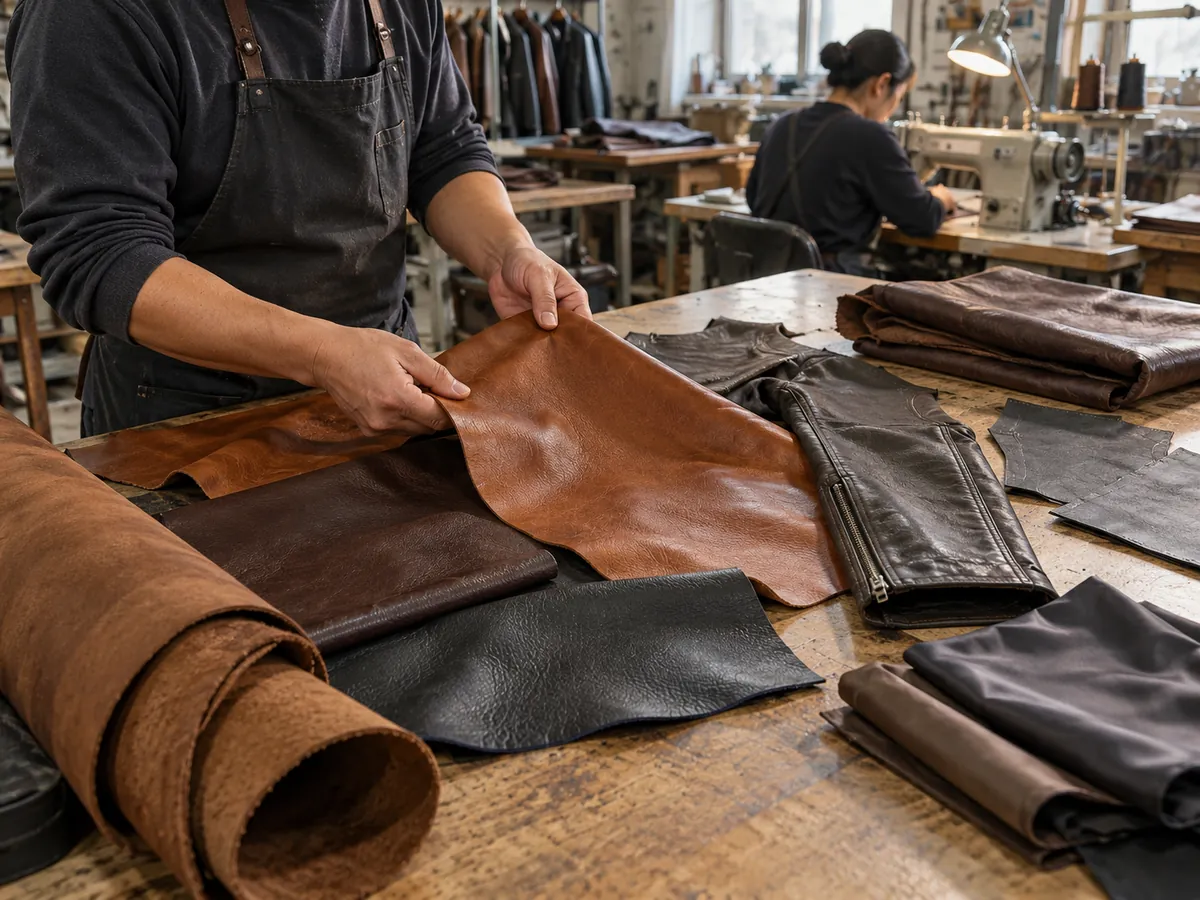
Smooth, grained, suede and embossed surfaces create different visual directions. Record the material identity and the surface description in separate fields: for example, the specified leather or synthetic component together with the intended colour and finish.
For suede, nubuck and suede-look references, keep the selected product's material details attached to the brief. For croco or snake-textured designs, name the desired pattern and the actual substrate as two separate attributes.
For cowhide or lambskin requests, confirm the species and finish for the quoted version. Identify plush-look, faux-fur and natural-fur trims by their actual fibre or species composition, as applicable, and confirm it against the selected material information. Check any wool or blend percentage against the actual composition information for the named panel it describes.
Name the body, sleeves, collar and any contrasting panels. Where materials differ, describe the boundary between them so the intended combination is clear.
Record the lining composition and any filling in their own fields. Consider the complete construction when discussing bulk, movement, layering and finished measurements.
Identify rib, plush-look edges, fringe, hardware and other trims separately. Connect their colour, composition and attachment to the selected garment version.
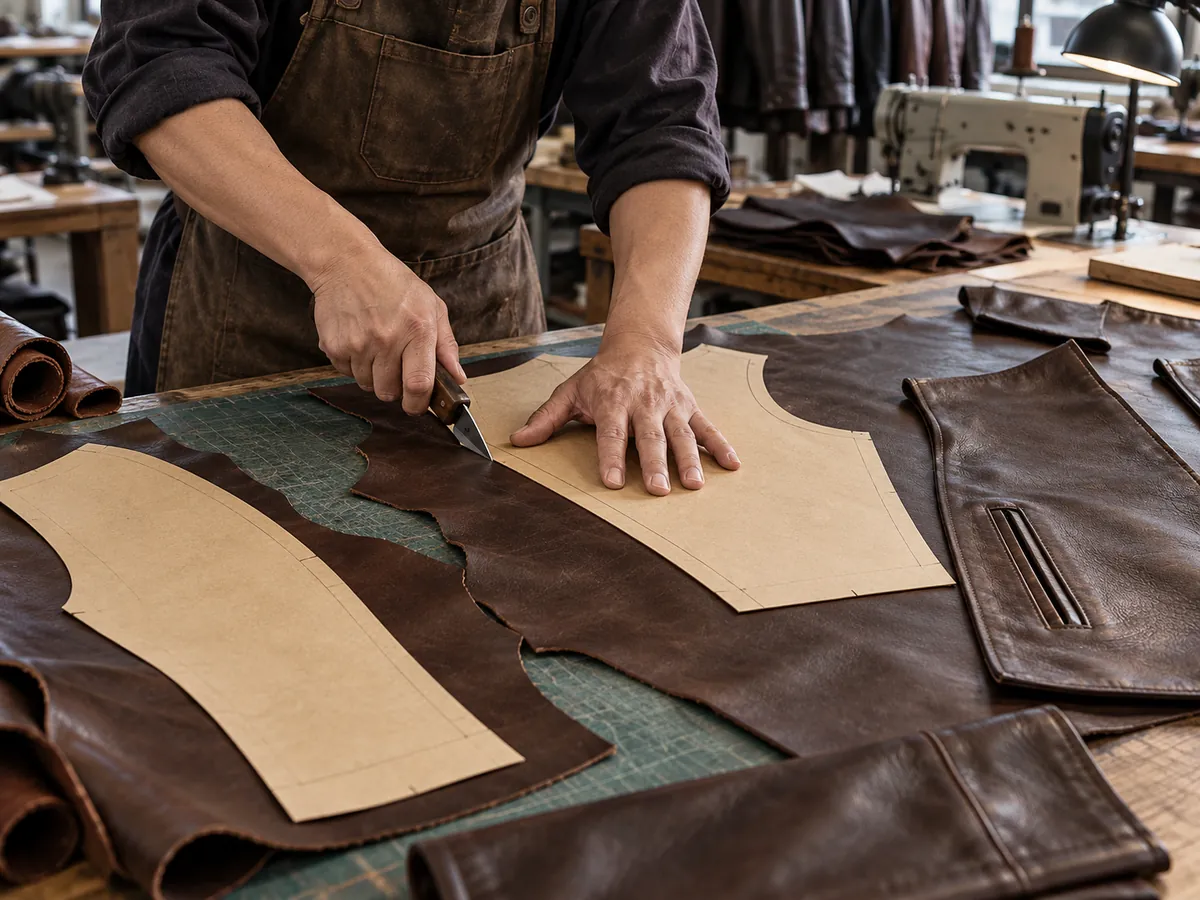
Use an accepted colour and surface reference for the chosen component. Include care requirements and the conditions in which the garment will be used. Where weather protection, breathability or another performance feature matters to the project, identify the relevant product statement and the documentation needed for your intended market.
Keep the accepted material sheet with the sample record. That gives the colour, feel, fit and artwork discussions a shared reference. Bring the completed component brief to the Relia enquiry page to discuss your chosen design.