Jacket Sizing & Fit Development | A B2B Measurement Guide
SIZING & FIT DEVELOPMENT
Make the size sheet part of your factory brief
A size curve is a set of garment sizes and the quantity planned for each. Build yours around the chosen jacket, your intended wearer and the finished measurements that describe the fit. Preserve the exact size labels shown on the product when you send an enquiry.
For a customer-designed jacket, give our China factory the current drawing or sample reference and the measurement sheet for that version. Link it to the chosen material combination, whether we purchase to your specification or you supply the physical materials for processing.
A US or European size code alone does not establish a universal conversion. Compare the selected jacket's finished measurements and intended fit before accepting an equivalent label.
Our catalogue includes product-specific size ranges and custom-size enquiry references. A base garment or measurement sheet helps explain the shoulder, body, sleeve and hem proportions you want to develop.
Prepare a measurement sheet that can be repeated
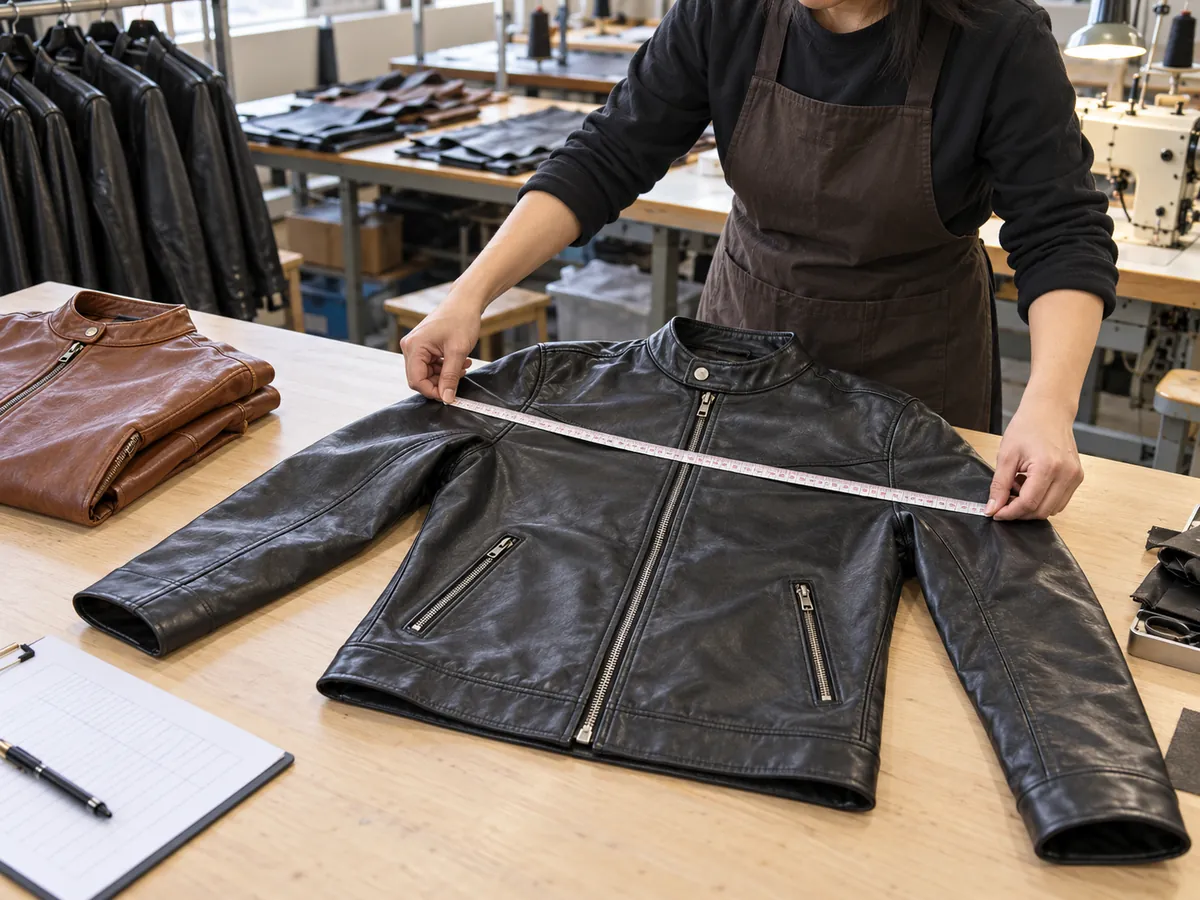
Record the unit and the exact start and end points for each measurement. Note whether the garment is fastened, laid flat and measured across one side or around the full body. A sketch or reference photograph can make an unusual seam or shoulder construction easier to explain.
- Select a base reference. Identify the garment, size label, version and intended fit.
- Name the points. Include body length, chest, shoulder, sleeve and hem dimensions relevant to that construction.
- Describe the method. State landmarks, tape path, unit and any measurement condition.
- Add the range. Record each exact label, its target dimensions and the planned quantity.
Review the pattern with its layers and components
A slim biker, a drop-shoulder bomber and a filled jacket call for different fit discussions. Include the clothing intended to sit beneath the jacket and the movement you want through the shoulder and sleeve. Review those choices with the selected shell, lining and filling.
For mixed constructions, identify the panel and seam arrangement before carrying measurements from a different garment into the brief. The materials guide helps connect component choices with this fit discussion.
When requesting a different size range or made-to-measure work, describe the target measurements and the desired relationship between sizes. That gives the pattern discussion a specific starting point.
Identify the existing base pattern or sample version and list the proportions that should remain unchanged. Mark any new range, grading or silhouette changes separately and agree the pattern and fit reference that needs fresh approval.
Approve the fit reference and the quantity mix together
Keep the reviewed sample, measurement method and accepted size sheet together. Record any changes to the body, shoulder, sleeve or hem and carry the current version into the quantity plan. Use the sample approval guide to document the next decision.
If dimensions after care matter to the project, specify the agreed care method and the measurement conditions before and after it. Agree the dimensional-change requirement and relevant sample or evidence review, keeping any measured result distinct from the acceptance limit.
If the material or construction changes, identify which fit points need review before carrying the size sheet into production. Keep the accepted pattern or sample version with the colour and size quantities for the order.
Ready to discuss the range? Send your product links, exact labels, quantities and measurement reference.
Discuss Jacket Sizing