Private-Label Jacket Options, Artwork and Trims
Build your original brand into a jacket through its label package, understated marks, back artwork, varsity lettering, custom lining or selected hardware. The right route depends on the shell, panel layout and intended visual effect.
Each specialist guide connects the brand detail to the actual garment and the sample or proof needed to review it. Start with the component you want to change rather than treating every private-label project as the same logo request.
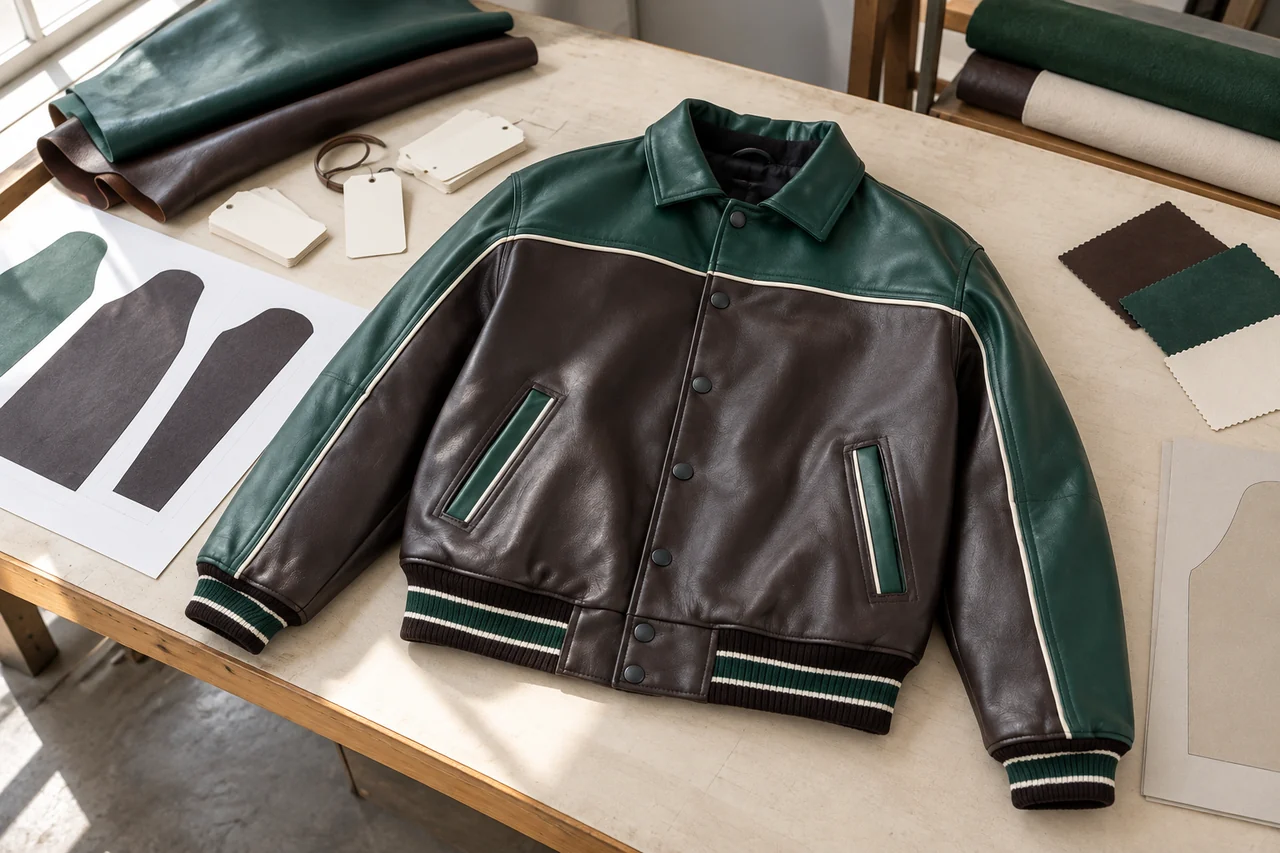
Choose the Brand Element You Are Planning
A complete private-label delivery brief covers more than a visible logo. Start with the component you need to develop, then connect it to the garment and quantity plan.
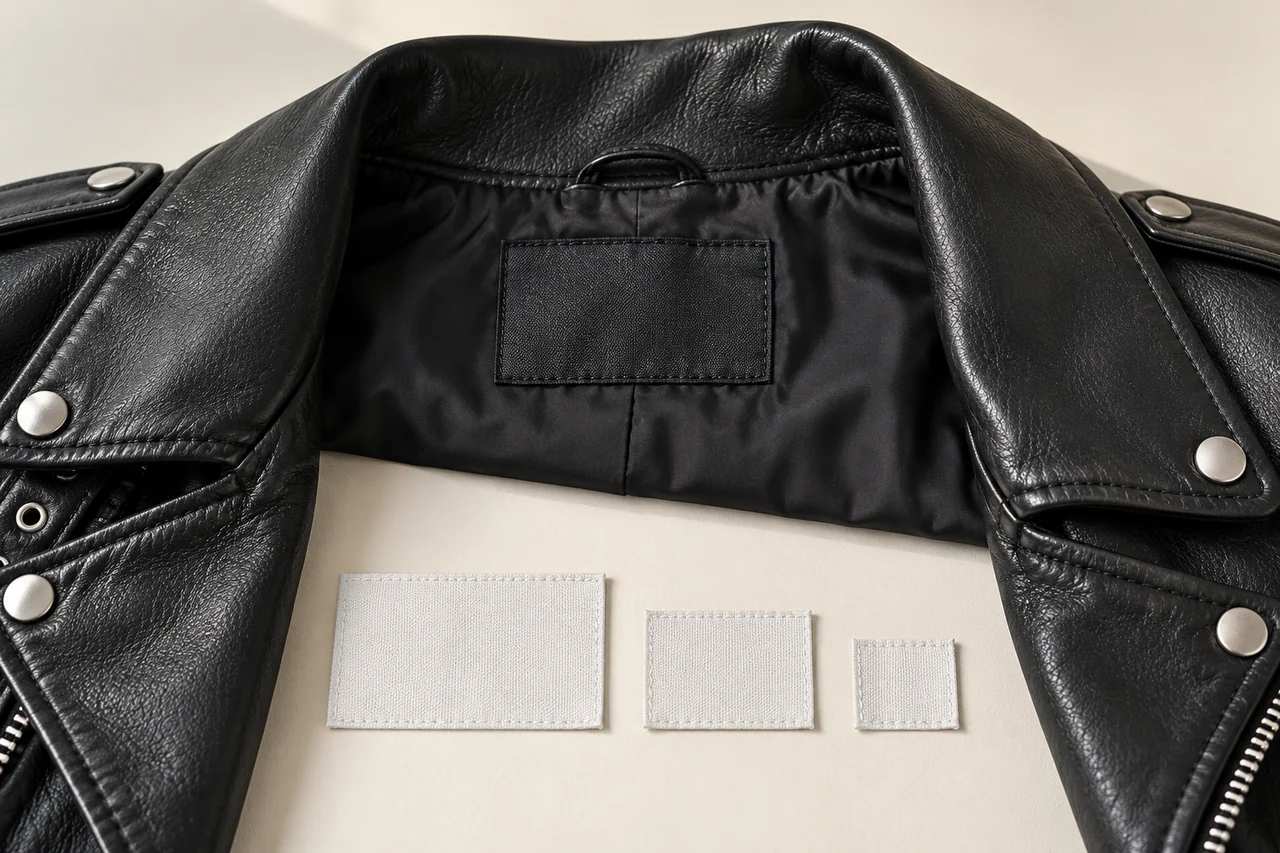
Plan Labels as Garment Components
Show the size, material, wording and position of each label. Keep neck labels, size labels, care information and hangtags as separate items when they are part of your project.
Provide the final artwork and identify what you will supply and what you want us to coordinate.
Make Small Marks Deliberate
A subtle brand mark depends on its position, scale and relationship to seams. Show the intended dimensions and a placement drawing rather than sending an artwork file alone.
Review the mark on the selected material and garment colour during sampling.
The final design file and colour references.
Finished width and height.
Distances from named garment points.
The mark shown on the intended material.
Fit Original Artwork to the Back Panel
A large back graphic needs a clear relationship to yokes, seams and garment sizes. Define the artwork area and explain how it should behave across the requested size range.
Keep your original artwork version with the approved placement reference.
Map seams and available artwork space.
State the finished graphic dimensions.
Explain any change across garment sizes.
Approve the placement on the sample.
Keep Fasteners in the Brand Specification
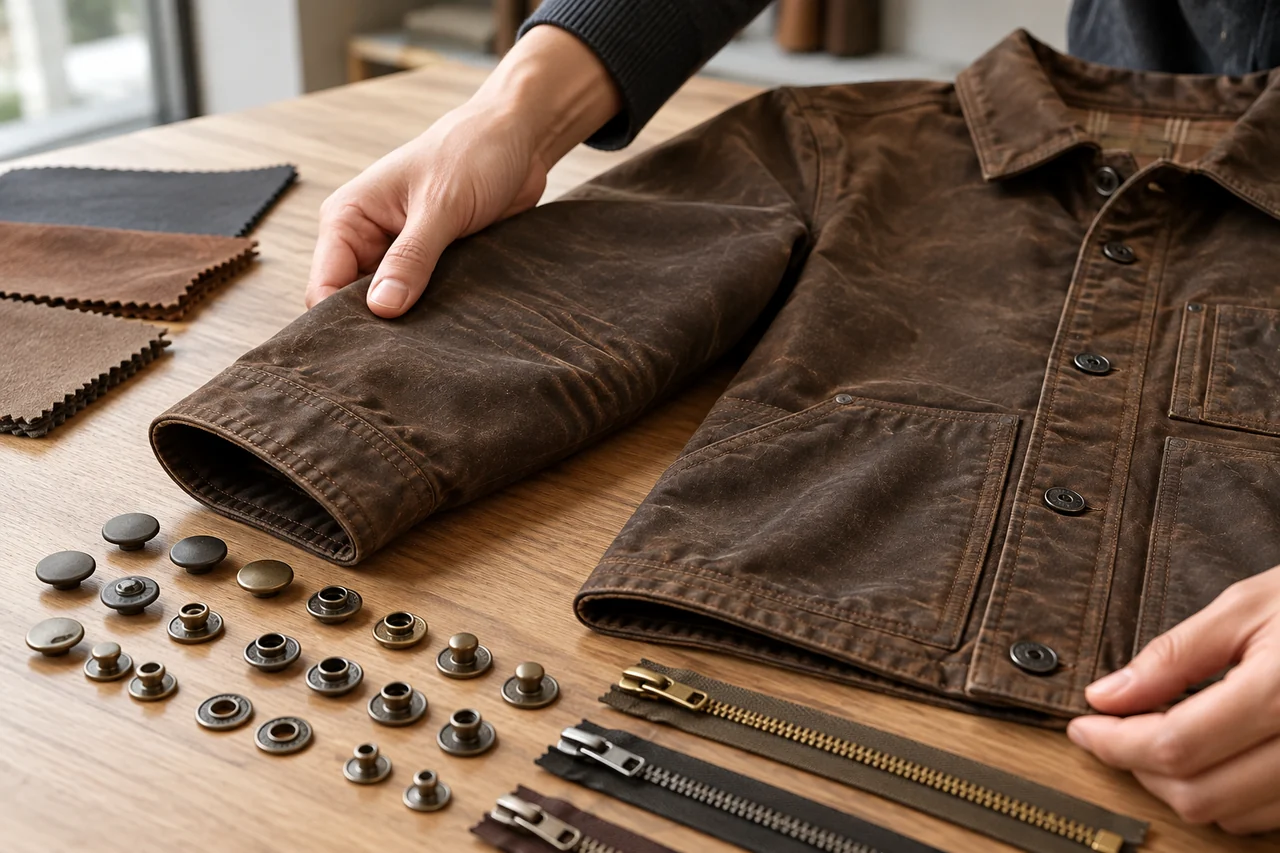
Zips, snaps and buttons influence both the look and construction of a jacket. Identify dimensions, finish and matching parts, especially when you nominate a particular component.
Include the supplied sample or exact item reference and keep alternatives subject to a named approval.
Give Lining Artwork Its Own File Set
An original printed lining needs artwork, repeat direction, colour references and a garment coverage brief. Show which parts use the design and which remain plain.
Review how the pattern meets openings and seams in the sample rather than relying on the flat artwork alone.
Scale and direction of the pattern.
Body, sleeves and any excluded areas.
Specified lining fabric and colour.
Placement and construction together.
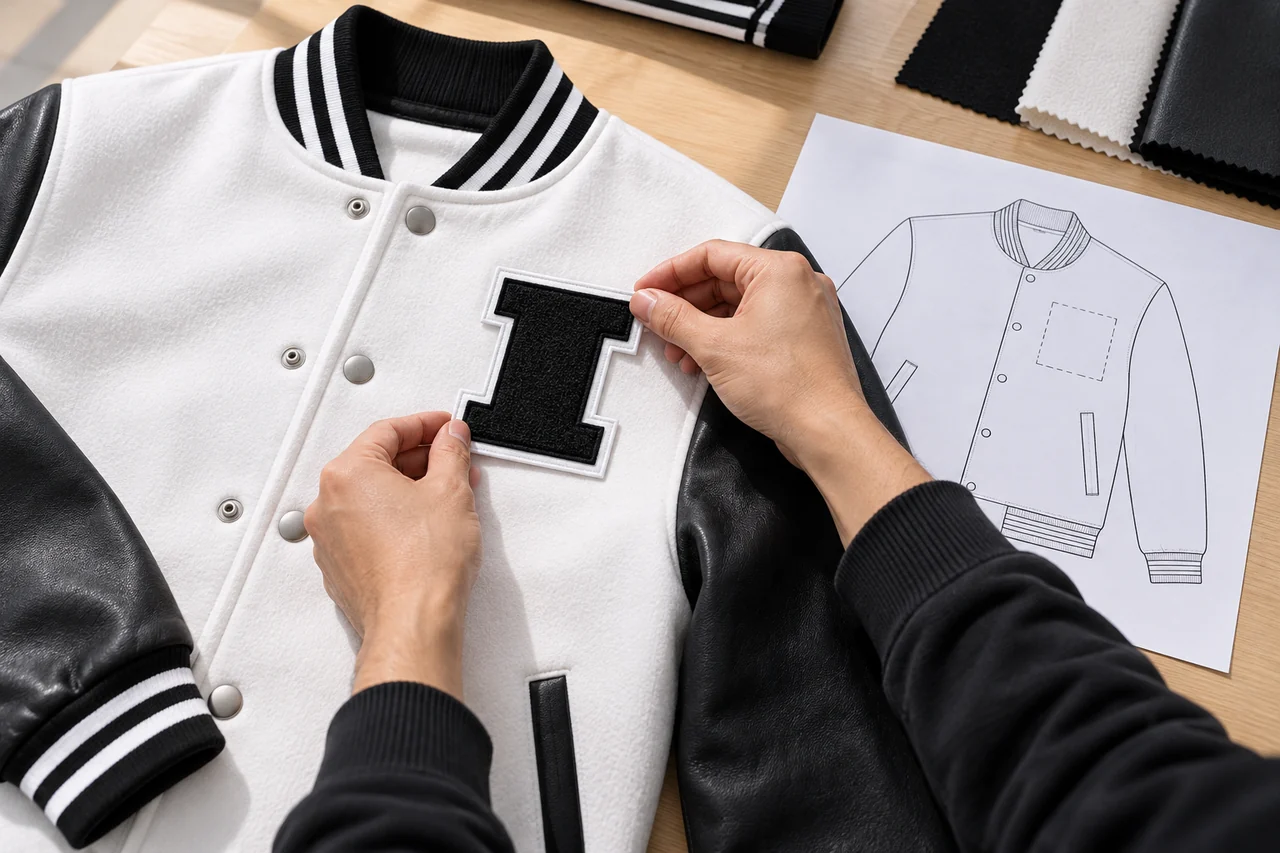
Balance Patches with the Varsity Shape
Lettering and patches need to sit comfortably within the body panels and sleeve proportions. Provide the artwork dimensions, colour and intended attachment approach.
Use the sample to review the relationship between the patch, closure, pocket and ribbed edges.
Approve One Connected Brand Delivery Brief
Keep the garment, artwork, labels and packing requirements in one versioned record. A changed artwork file should be identified as clearly as a changed zip or lining.
Before production, bring the accepted brand components and written specification into agreement.
Accepted style, colour and measurements.
Final file, dimensions and placement.
Labels, lining and hardware references.
Agreed tags, identification and packaging.
Send the Design behind Your Brand
Share the jacket design together with your artwork, label list and component references. Tell us which elements you will provide and which need project coordination.
Add quantities and your intended dates so we can discuss a complete private-label jacket order.
Qingdao Relia Jacket Co., Ltd.
Shuyuan Road, Qingdao, Shandong, China
+86 18561762631 · WhatsApp
Drawings, materials and measurement chart.
Original artwork and placement details.
Colour-size quantities and delivery needs.