
Jacket Manufacturing Guides by Style
Compare jacket manufacturing by the structure you want to create: asymmetric biker, stand-collar racer, bomber, flight, varsity, hooded, cropped, blazer and shirt-jacket directions. Each guide connects the silhouette with actual catalogue materials and garment details.
Choose the closest shape, then review its collar, closure, pocket and fit relationships. Your own design and selected materials define the custom version we discuss.
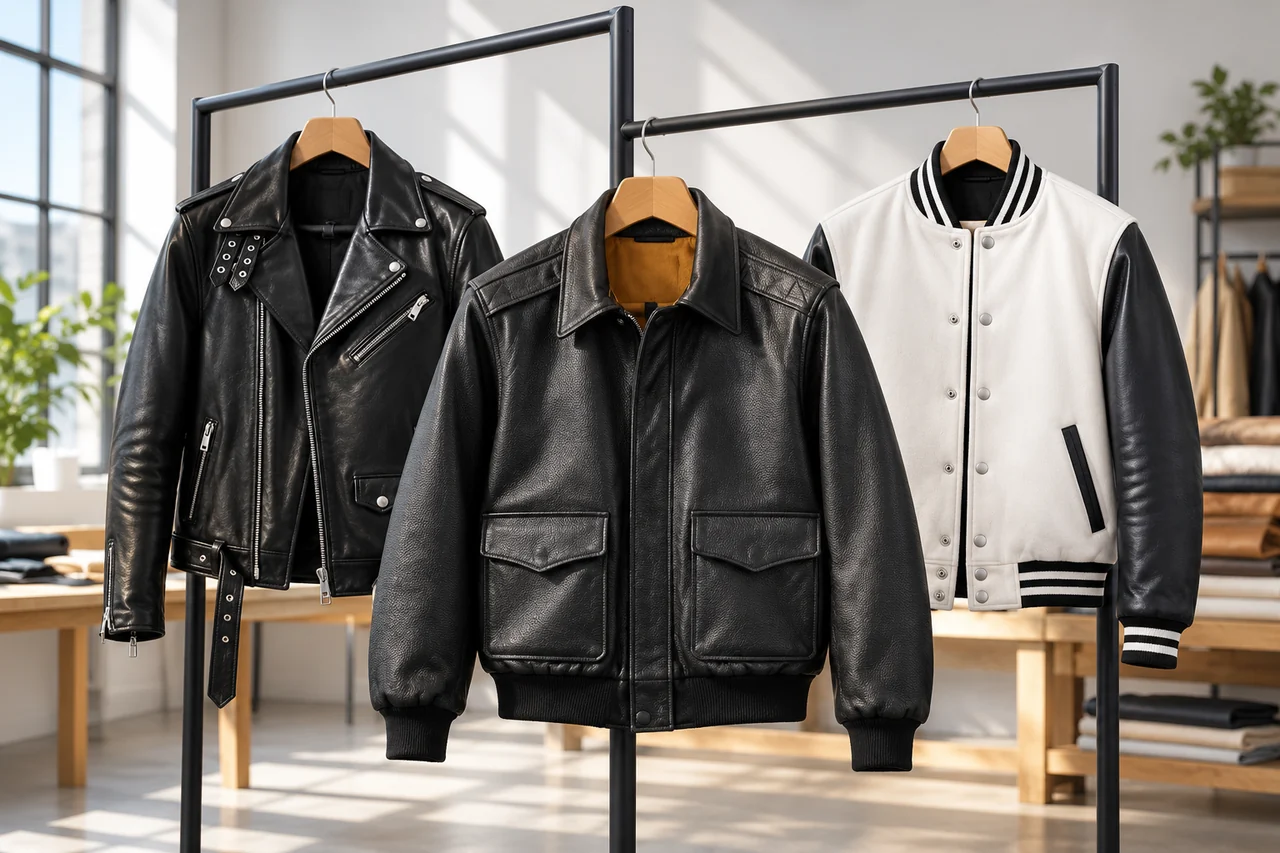
Choose the Construction Closest to Your Design
Each guide focuses on a different silhouette and its manufacturing brief. Start with the closest shape, then identify the details you want to keep, remove or redesign.
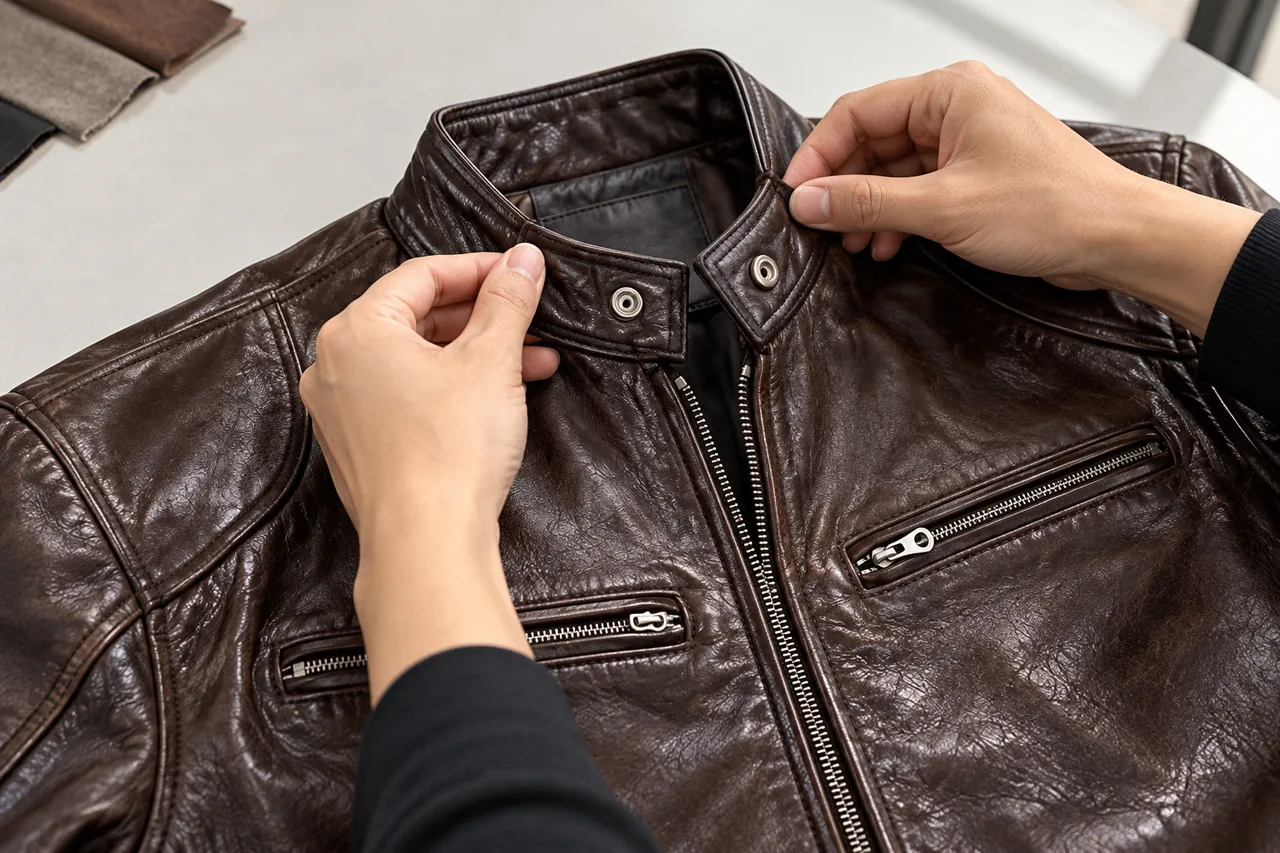
Define the Collar and Front Opening
A stand-collar racer and an asymmetric biker have different front structures. Show collar height, closure direction, zip position and the relationship between pockets and panel seams.
Close-up drawings make the intended construction clearer than a style name alone.
Match the Hem Construction to the Shape
A ribbed bomber hem gathers the body differently from a straight trucker hem or a belted biker waist. Include the finished opening and how you want the jacket to sit when fastened.
Keep the rib specification and body measurement chart connected when developing a bomber or varsity design.
Body volume and rib opening work together.
Length and opening define the lower silhouette.
Belt position and closure shape the garment.
Specify the Material at Each Panel
Leather, PU, suede-style surfaces and woven panels can create similar outlines with different component requirements. Name the material for each part instead of relying on the overall appearance.
A fabric hood or sleeve panel needs its own colour, attachment and finishing brief.
Shell material and surface reference.
Matching or contrast material and finish.
Fabric, shape and attachment.
Lining coverage and internal details.
Coordinate Shorter Shapes with the Fit
A cropped biker needs its body length, sleeve length and waist position considered together. For a women’s blazer, lapels, shoulder shape and waist shaping give the project a different fit direction.
Show the intended proportions in drawings and finished measurements before reviewing the sample.
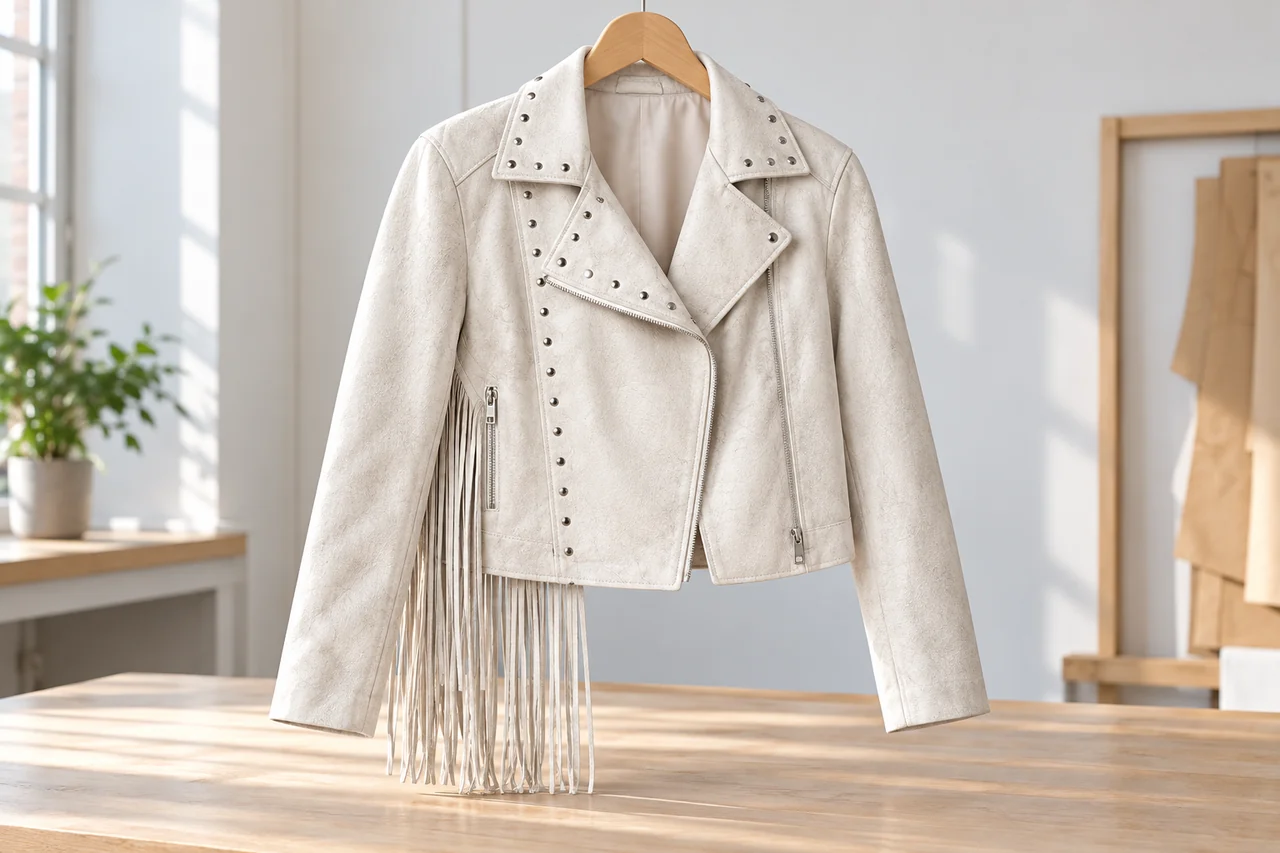
Translate Vintage Details into Current Components
A2-style and B3-style describe recognizable design directions. The order still needs a clear brief for collar materials, lining, pocket construction, rib or straps.
Share the vintage details that matter to your collection and the changes you want for your own garment.
Body length, volume and shoulder line.
Shape and specified surface or trim.
Opening, flap and position.
Lining construction and intended fit.
Keep Quiet Details in the Specification
A shirt-style jacket may look simple, but yoke position, pocket shape and seam finish still define its character. Record these details with the material surface and collar reference.
Use the sample to review the balance of a clean silhouette as well as its individual components.
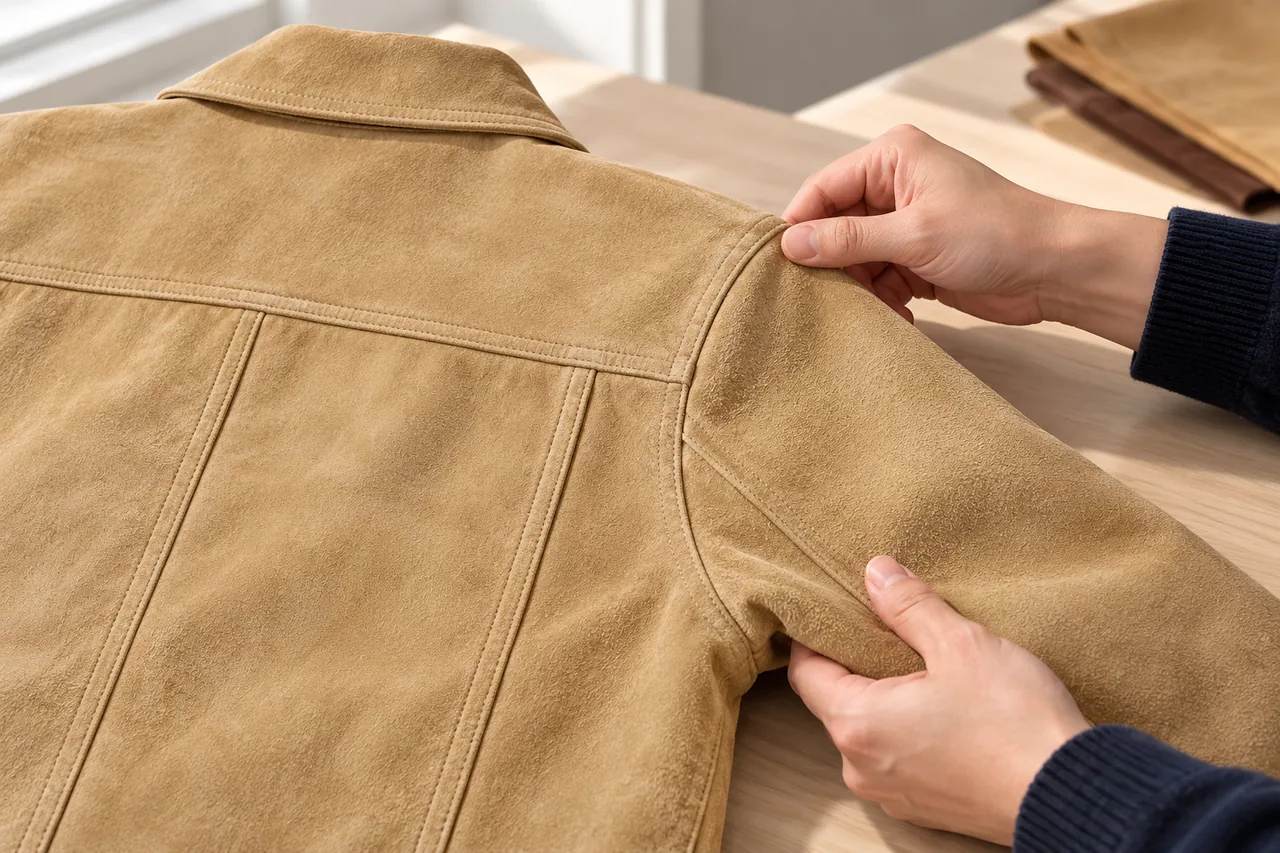
Review the Style as a Finished Garment
Look at the closed front, back shape and side profile during sampling. Check movement and the intended layers alongside the measurement chart.
Record feedback by component so the next design version carries the changes clearly.
Front, back and side proportions.
Dimensions and intended layers.
Collar, pockets, seams and fasteners.
Surface, colour and decoration.
Send the Shape and the Order Outline
Share your front and back drawings or the catalogue details you want to develop. Add the material route, size chart and quantities by colour and size.
We can discuss your custom jacket style and confirm the sample and commercial arrangements by email.
Qingdao Relia Jacket Co., Ltd.
Shuyuan Road, Qingdao, Shandong, China
+86 18561762631 · WhatsApp
Your design with the key construction details.
Factory-sourced, nominated or supplied materials.
The intended style, colour and size mix.